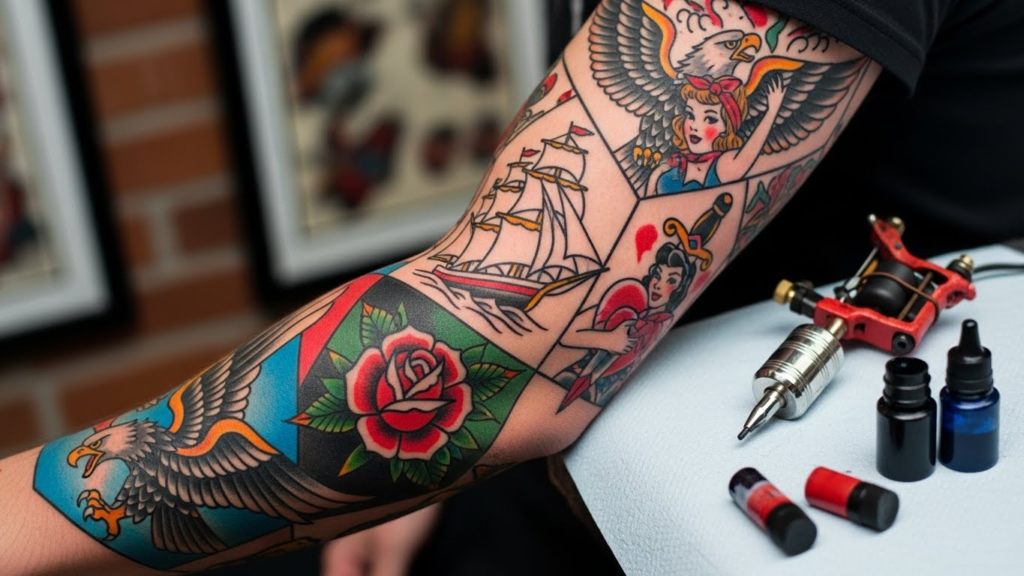
I remember the first time I started seriously considering traditional tattoos. I loved the boldness, the heavy black lines, and the deep historical roots—but I worried that the classic Sailor Jerry style felt too blocky or masculine for my personal aesthetic.
If you’re anything like me, you adore the timeless look of American Traditional but want to ensure your leg piece flows beautifully with the contours of your body, creating something distinctly feminine and powerful.
Designing a leg tattoo that isn’t just a collection of cool flash but a cohesive, flowing piece of art is a strategic endeavor. It’s about mapping, scaling, and selecting the right motifs.
This deep dive will show you exactly how world-class artists approach the “feminine leg sleeve,” ensuring your investment is both impactful and eternally stylish.
Mapping the Canvas: Strategic Placement for Flow
The leg is one of the most dynamic canvases on the body. It’s round, moves constantly, and changes shape depending on if you are sitting, standing, or walking. Ignoring these natural contours is the number one mistake in leg tattoo design.
For a tattoo to feel truly feminine, it needs to accentuate your curves, not flatten them.
Designing for Movement
Think about where the eye travels. The front of the shin or the outside of the thigh offer broad, flat areas ideal for large feature pieces (eagles, ships, large roses). The back of the calf and the inner thigh, however, demand designs that stretch and curve.
- The Knee Ditch (Popliteal Fossa): Use smaller, circular designs (like flowers, spiderwebs, or small small tattoos with big meaning) that frame the joint, rather than covering it completely.
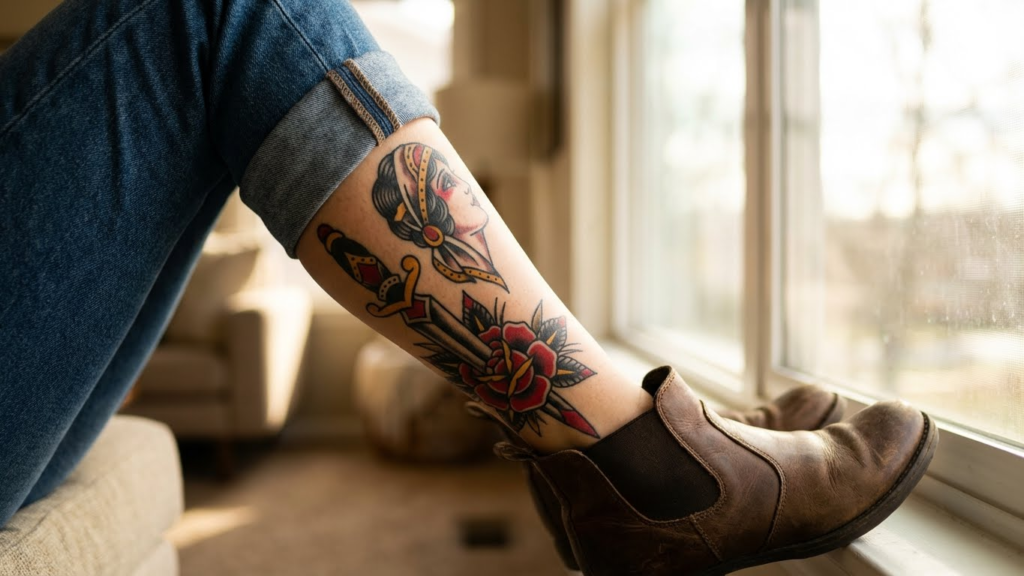
- The Shin Bone: This is a powerhouse spot. Use tall, vertical designs (swords, daggers, lady heads) to elongate the leg and emphasize structure.
- The Thigh: The ultimate canvas for large, detailed pieces. Designing on the thigh offers fantastic coverage, which works beautifully when styling outfits like shorts or mini skirts (for outfit inspiration, see my guide on Baddie Club Fits That Always Hit).
✨ TOP PICK FROM FASHIONAURA.BLOG
Traditional Tattoo Flash Reference Book (Sailor Jerry Style)
Why this fits: Essential for understanding the history, scaling, and classic composition elements of American Traditional art before you start designing your own flash.
Softening the Lines: Traditional Motifs with a Feminine Twist
American Traditional is famous for its bold, often stoic imagery. However, many motifs can be interpreted with sensitivity and scale to perfectly suit a woman’s body.
Motif Selection: Focusing on Form and Detail
When selecting your flash, consider how the inherent lines and curves of the image can enhance the softness of the leg.
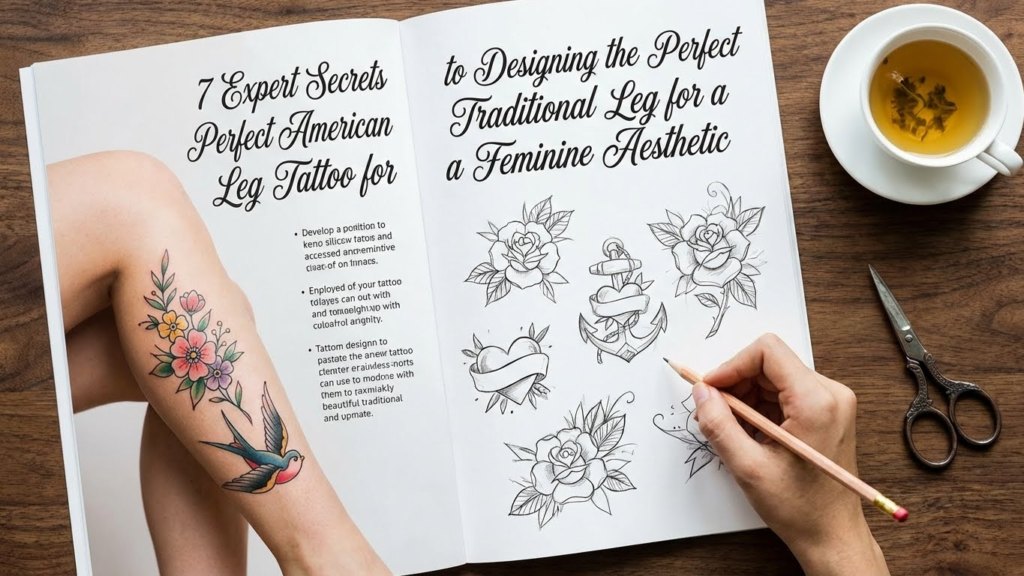
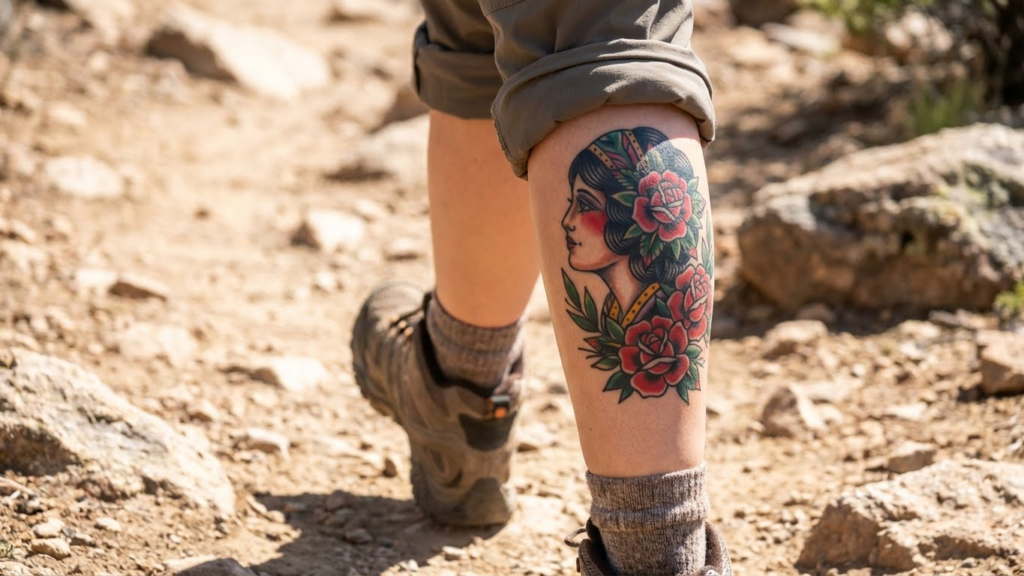
- Lady Heads: Instead of the fierce, often stoic sailor’s girl, opt for detailed portraits featuring softer elements like flowing hair, delicate jewelry, or subtle floral headpieces.
- Nature & Flowers: Traditional roses and swallows are staples. Use clusters of small roses or integrate flowing banners and ribbons to break up large areas of black ink.
- Animals: Traditional panthers, snakes, and eagles are powerful. Scale them down slightly or place them where their natural curves (like the snake’s coil or the eagle’s wing tip) hug a muscle or bone structure.
I find that mixing in traditional elements with personal symbolism—like integrating a specific birth flower or a reference to a powerful narrative—can deepen the connection, as I explored in my post on Tattoos With Deep Meaning.
The Power of Composition: Filler and Cohesion
The difference between a collection of individual tattoos and a cohesive, high-fashion leg sleeve is the filler. Filler connects disparate pieces, making the entire design read as one harmonious work.
For a feminine traditional leg, filler shouldn’t feel heavy or chaotic.
Choosing Subtle Filler Elements
While stars, dots, and smoke are classic, softer options can achieve a more elegant flow:
- Chains and Pearls: Thin chains, delicate pearls, or floating ribbons work beautifully as connecting elements, especially around the ankles or knees.
- Negative Space: Don’t feel pressured to fill every inch. Strategic negative space (untattooed skin) allows the bolder pieces to breathe and reduces the visual weight, which is essential for a graceful look.
- Whip Shading: Ask your artist to use soft, whipped shading techniques for backgrounds (like clouds or smoke) instead of solid black fills. This adds texture without the density of solid color.
✨ TOP PICK FROM FASHIONAURA.BLOG
Professional Tattoo Aftercare Balm
Why this fits: Essential for keeping your new Traditional tattoo vibrant, healthy, and perfectly healed—crucial for maintaining those bold lines and saturated colors.
Maintaining the Color Palette
Traditional tattoos are known for their limited palette: black, red, green, and yellow. To enhance the femininity, consider prioritizing specific colors:
- Use vibrant pinks and magentas (instead of strict primary reds) in roses and ribbons.
- Keep the black outlines crisp, but utilize the negative space to make the colors pop.
- Ensure the colors you choose complement the tones of your favorite wardrobe pieces (just as you might plan a manicure palette, like those in Light Pink Chrome Acrylic Nails).
✨ TOP PICK FROM FASHIONAURA.BLOG
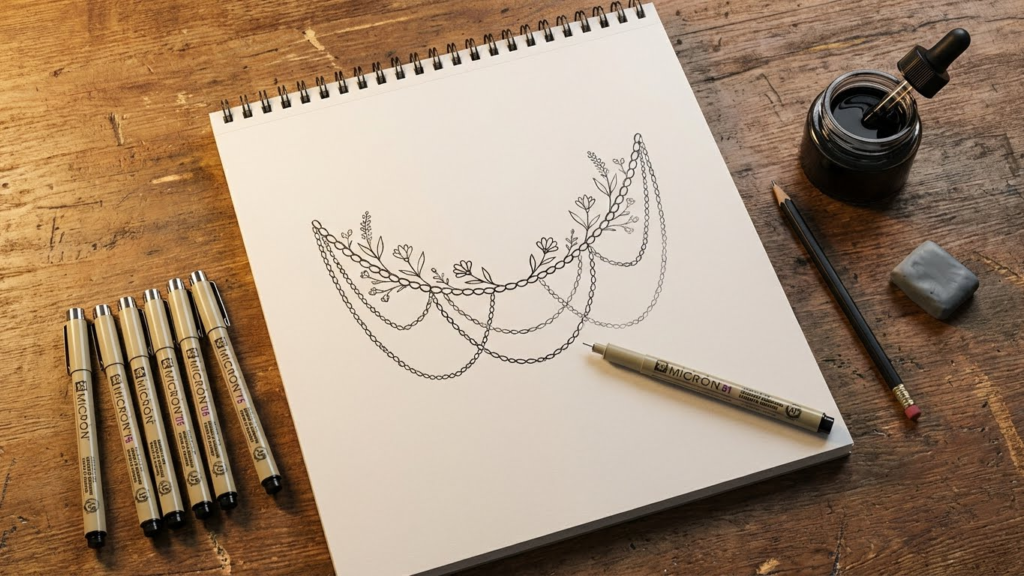
Micron Fineliner Pen Set for Outlining
Why this fits: If you are planning your own custom flash or mocking up design placement with your artist, these pens offer the precise lines needed for traditional style.
Final Thoughts: Your Bold Legacy
Designing an American Traditional leg tattoo is truly an exciting journey. It’s a powerful fusion of historical toughness and modern femininity. Remember to communicate clearly with your artist about the desired flow, scale, and the use of negative space.
Your leg sleeve should feel like an integrated part of your personal style—bold, beautiful, and utterly unique.
Ready to start gathering inspiration for your dream piece? Don’t forget to save this guide to your tattoo mood board on Pinterest so you can reference these essential design secrets!
Frequently Asked Questions About Traditional Leg Tattoos
How long does an American Traditional leg sleeve take to complete?
This varies dramatically based on your desired density and the artist’s speed. A full leg sleeve, from ankle to hip, typically requires 50 to 100+ hours of tattooing, spread across 10 to 20 sessions over 1 to 3 years. It’s a marathon, not a sprint!
Are leg tattoos more painful than arm tattoos?
Generally, areas near bone (shins, ankles) are more sensitive than fleshy areas (thighs, calves). The inner thigh and back of the knee (the ditch) are often cited as the most tender spots on the leg, while the outer calf is typically one of the easiest areas to sit through.
What are the most popular feminine American Traditional motifs right now?
Classic roses, dramatic dagger-through-heart designs, flowing ribbons with personalized text, and stylized mythological lady heads (like Medusa or Siren) remain incredibly popular. We are seeing a trend towards brighter pinks and softer blues instead of just the heavy red and green.