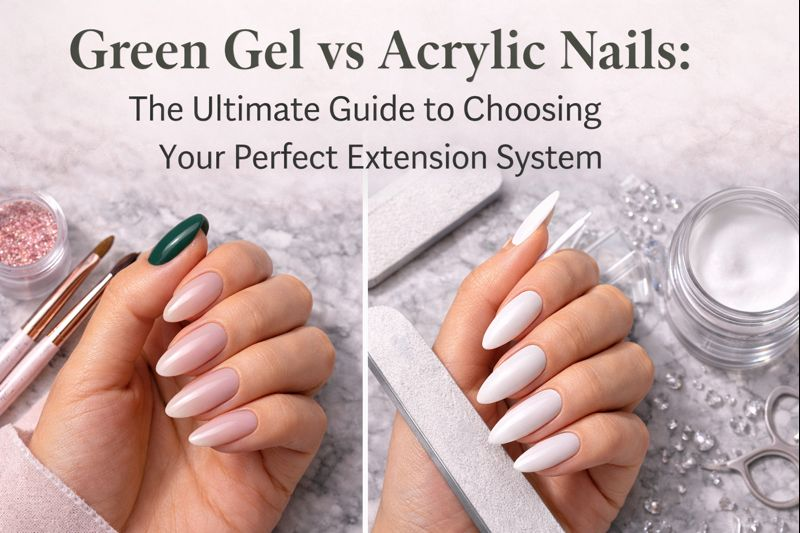
If you’ve ever sat in a salon chair feeling overwhelmed by the terminology—soft gel, hard gel, polygel, dip powder, and the classic acrylic—you are definitely not alone. For years, I struggled to figure out which system offered the best balance of durability and health for my own nails. I remember one disastrous attempt at DIY removal where I confused hard gel (which some folks still call “green gel” based on older product formulations) with regular soak-off gel polish. I ended up filing way too aggressively and destroying my natural nail plate for months!
That painful learning curve taught me this truth: success in extensions isn’t about the design; it’s about choosing the right foundation. As a professional who lives and breathes nail trends, I’m here to break down the eternal struggle: Green Gel (Hard Gel) vs. Acrylic. We’re covering the pros, the cons, and where each system truly shines so you can make an informed, healthy, and glamorous choice.
1. Decoding the Terms: What Exactly is “Green Gel” (Hard Gel)?
Before we dive into the comparison, we must clarify the terminology. “Green Gel” is not a specific chemical compound, but often a historical or slang term used by older nail techs to refer to Hard Gel or Builder Gel. Why green? Early UV builder gels, which were thick, non-soakable, and used primarily for sculpting extensions, sometimes had a greenish or greenish-blue tint in the jar, or they came packaged in green containers to distinguish them from standard soft gels.
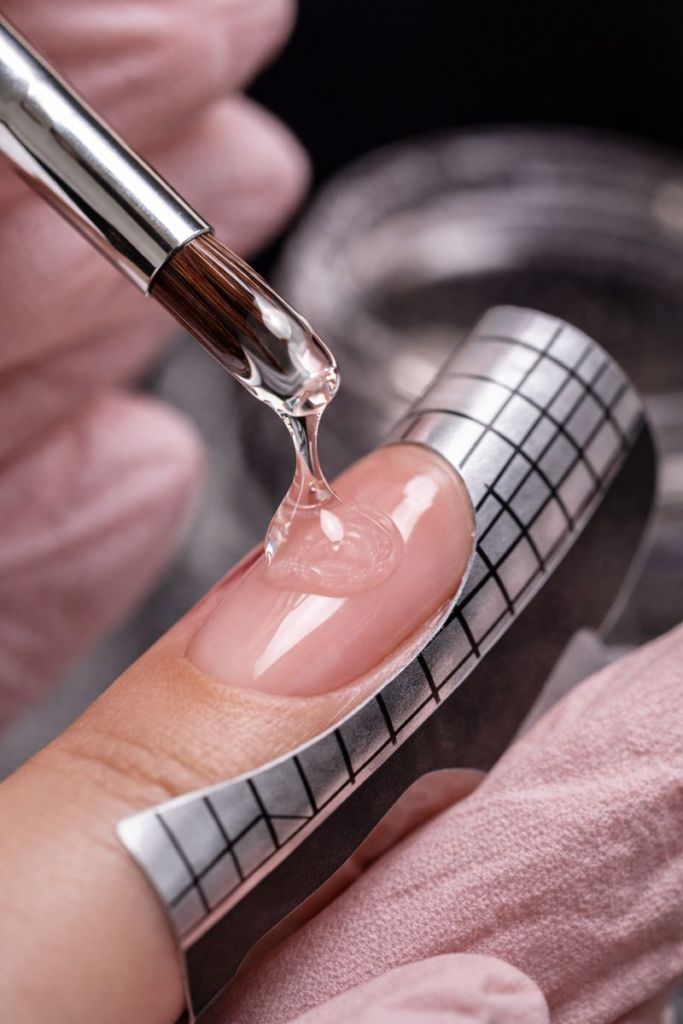
Unlike standard gel polish or soak-off gel extensions, hard gel has a structure similar to acrylic—it is designed to create extreme length and structure. However, it cures under a UV/LED lamp and has two key differentiators:
- It is virtually odorless (a huge pro for techs and clients sensitive to monomer).
- It must be filled or filed off completely (it will not soak off with acetone).
2. The Acrylic Advantage: Pros, Cons, and Why They Still Rule Length
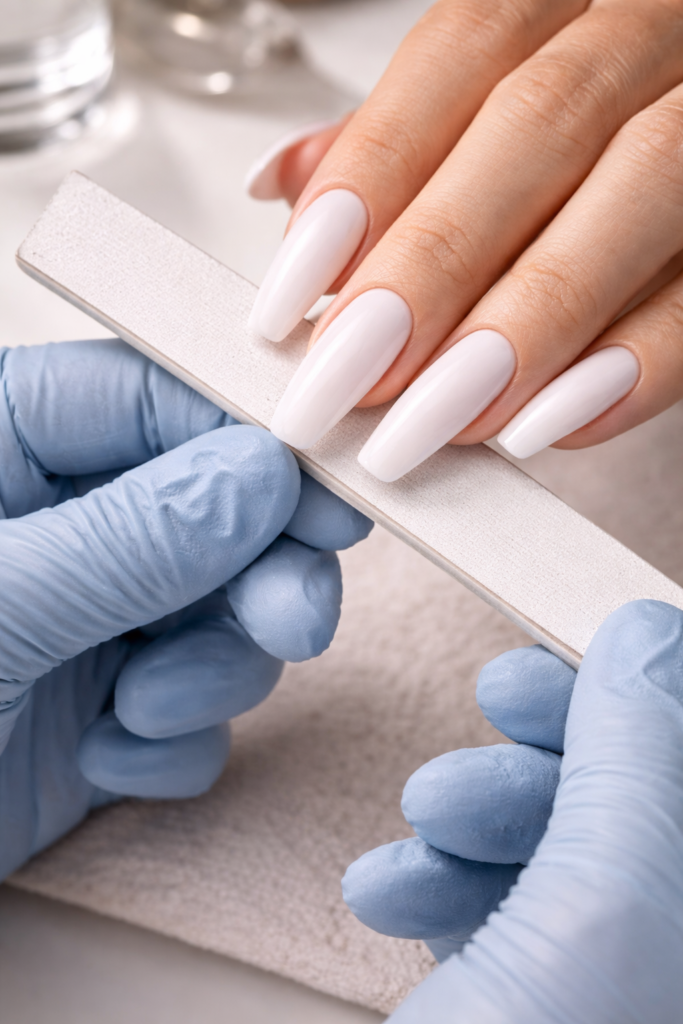
Acrylic nails are the OG extension system. They are created by mixing a liquid monomer (the smell) with a powdered polymer (the structure). This creates a pliable bead that hardens immediately upon exposure to air.
The Pros of Acrylic:
- Unmatched Durability: For extreme length or aggressive work environments, acrylic is tough to beat. It is harder than gel, meaning it handles impact better.
- Affordability: Generally, the products are less expensive, and application time can be faster, sometimes resulting in a lower price point than hard gel.
- Easy Fixes: If an acrylic nail breaks, it can be patched quickly with new powder and monomer.
The Cons of Acrylic:
- The Odor: The scent of ethyl methacrylate (EMA) monomer is strong and requires excellent ventilation.
- Less Flexible: They can feel rigid and look thick if not applied expertly.
If you are looking for dramatic, long nails—like stiletto or coffin shapes—and durability is your number one goal, acrylic is often the fastest and most reliable route. To ensure you start your acrylic journey right, invest in a quality system. I always recommend the Kiara Sky All-In-One Acrylic Powder Kit for home users because the quality control is excellent and they offer fantastic colors. For those who prefer a slightly shorter, practical look, but still need strength, acrylics are fantastic bases, as I discussed when planning my Short January Nails That Are Stylish and Practical.
3. The Hard Gel Difference: Flexibility, Health, and Natural Appeal
Hard Gel (Green Gel) is the modern answer for those who want strong extensions without the fumes or the extreme rigidity of acrylic. It comes in a thick, honey-like consistency in a jar and requires a UV/LED lamp to cure.
The Pros of Hard Gel:
- Flexibility & Comfort: Hard gel is slightly more flexible than acrylic, which means it moves marginally better with the natural nail. This often results in fewer painful breakages or lifting.
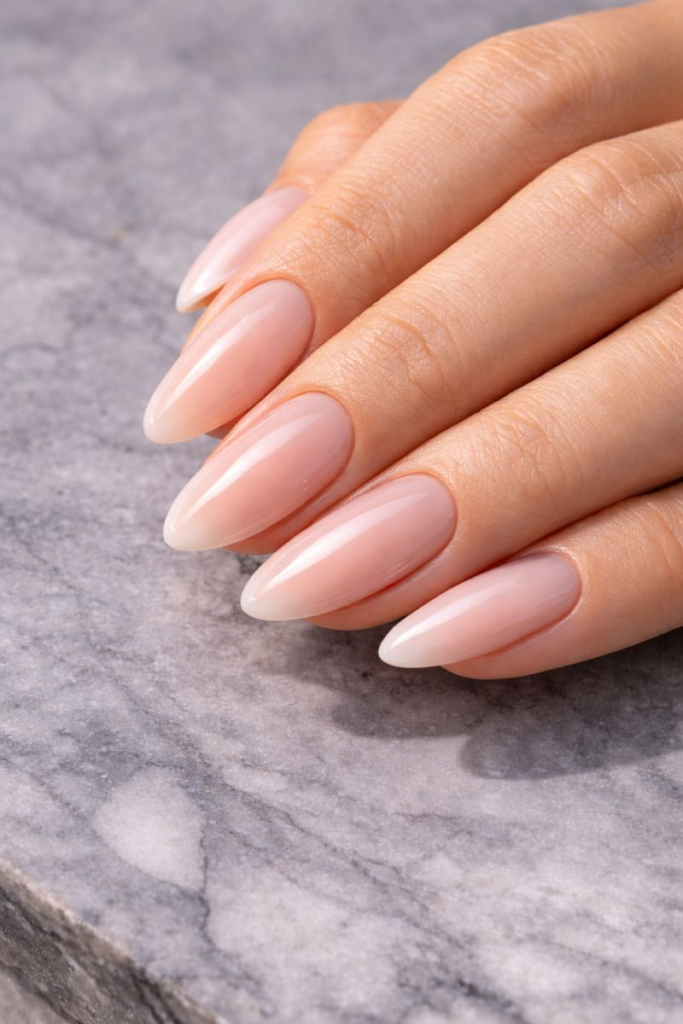
- Natural Look: Hard gel can be sculpted into thinner, more natural-looking extensions, particularly around the cuticle area, because it self-levels slightly before curing.
- Zero Odor: Ideal for anyone sensitive to chemical smells.
- High Shine: Gel naturally has a glass-like finish, which stays glossy longer.
The Cons of Hard Gel:
- The “Heat Spike”: When curing, especially thick layers, hard gel can generate heat, causing a sharp, temporary burning sensation.
- Filing Required: Like acrylic, it must be filed off, requiring more skill or an investment in an electric file.
Hard gel is my personal preference for a client who wants medium-to-long extensions but prioritizes a thin, elegant look and lower chemical exposure. If you are applying hard gel yourself, you need an efficient lamp. I recommend the SunUV 48W LED Nail Lamp; it cures almost any brand quickly and evenly, minimizing the heat spike. I find that the slight flexibility of hard gel works perfectly for embracing soft texture designs, like those found in Cozy January Nail Designs Inspired by Winter Textures.
4. Design Showdown: Which System Handles Advanced Nail Art Better?
When it comes to intricate art, both systems have strengths, but gel typically wins the detail game due to its non-curing nature.
- Acrylic & 3D Art: Acrylic is unbeatable for structural 3D nail art (like flowers or raised elements). Because it sets instantly upon mixing, the tech can build layered, sturdy shapes that are difficult to replicate with traditional gel.
- Hard Gel & Detail Art: Gel (both builder and color gel) does not set until it hits the lamp. This means you have infinite time to perfect detailed work, create intricate marbling, or paint thin lines before curing it all at once.
If your designs often involve very tiny, fine lines, or complicated placements of shimmer and foil, the curing control of gel is indispensable. To achieve perfect micro-details, you need the right tools. I never start a complicated design without the Makartt 15-Piece Nail Art Brush Set; the liner brushes are essential for precision work, especially when attempting trends like the ‘Glitchy Glam’ look.
The Comparison at a Glance
| Feature | Acrylic | Hard Gel (Green Gel) |
|---|---|---|
| Sculpting Method | Liquid/Powder mixture, air-cured | Pre-mixed gel, UV/LED cured |
| Odor | High (Chemical smell) | None to minimal |
| Flexibility | Low (Very rigid) | Medium (More flexible, less breakage) |
| Removal | Soakable (Acetone) or Filed Off | Filed Off Only |
| Best For | Extreme length, budget-friendly structure | Natural thickness, high shine, sensitive clients |
Conclusion: Choosing Your Extension Path
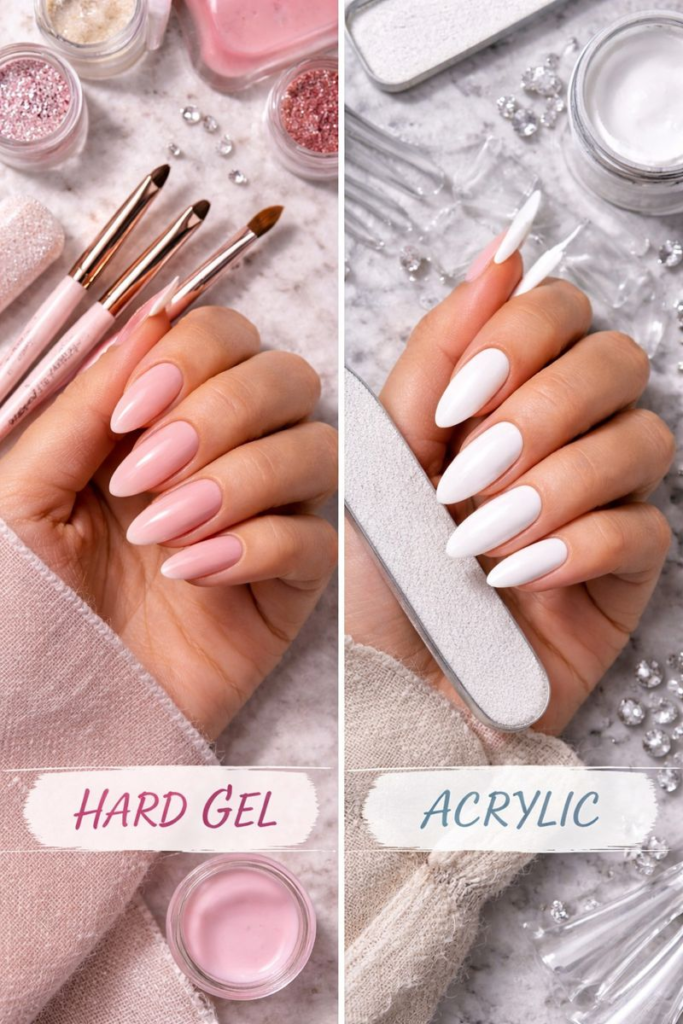
The choice between Green Gel (Hard Gel) and Acrylic truly depends on your lifestyle and priorities. If you need maximum durability, are looking for affordability, and don’t mind the fumes, acrylic is a powerful choice. However, if you crave a thinner, more natural-feeling extension with incredible shine and zero odor, hard gel is the premium solution that provides flexibility without sacrificing too much strength.
Ultimately, whichever system you choose, ensure you prioritize healthy application and removal—that is the real secret to beautiful nails year-round. Save this guide to Pinterest for your next salon consultation!
Frequently Asked Questions About Nail Extensions
What is the healthier choice for natural nails?
Neither acrylic nor hard gel is inherently “healthier”; the health of your natural nail is determined almost entirely by the application and, critically, the removal process. Improper filing during preparation or aggressive peeling during removal is what causes damage. Since hard gel requires filing (not soaking), it demands a skilled technician or careful use of an e-file to prevent thinning the natural nail plate.
Can I switch between hard gel and acrylic?
Yes, you can absolutely switch! However, you must ensure that the previous product is completely (or almost completely) filed away before starting the new application. Mixing product bases on the nail can lead to lifting and poor adhesion.
How long do these extensions typically last?
Both hard gel and acrylic nails are designed to last 2 to 3 weeks before requiring a fill (a maintenance process where product is added near the cuticle). Longevity depends heavily on how fast your nails grow and how frequently you use your hands for strenuous tasks.