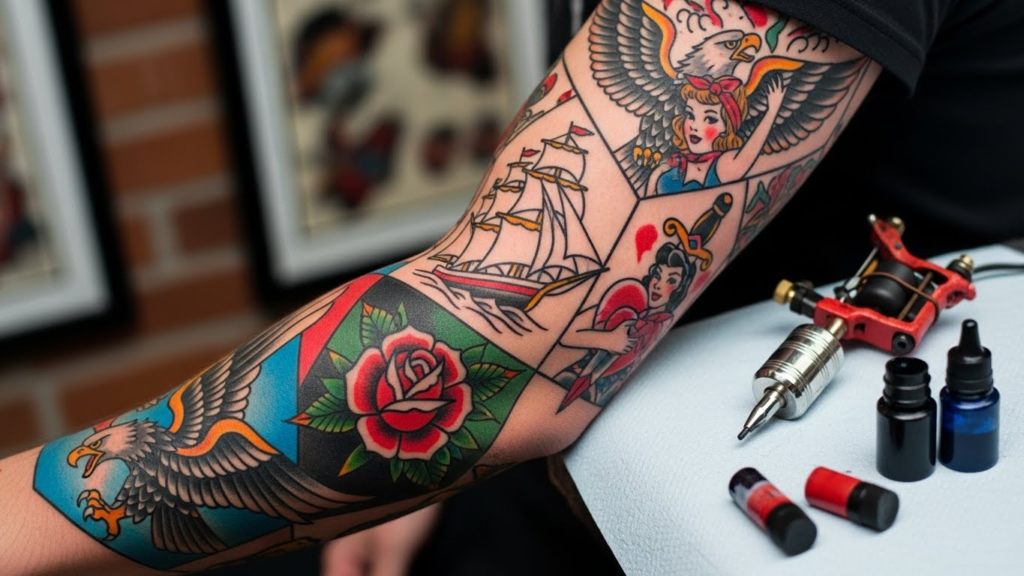
There is nothing quite as timeless, bold, and visually satisfying as a solid Black and White American Traditional tattoo. It’s the kind of art that makes a statement without needing a whisper of color.
When I got my first big traditional piece—a thick-lined ship rocking on a deep black sea—I instantly fell in love with that intense, beautiful contrast. But let’s be real: the elements are cruel, and black ink loves to gray out over time if you don’t treat it right.
Maintaining the punchy saturation and the iconic snap of high contrast in B&W Traditional work requires discipline. This isn’t just about general skincare; it’s about preserving art designed to last a lifetime. If you want those bold lines and heavy black fields to look as rich in 20 years as they do today, you need a strategy.
Let’s dive into the essential care, contrast secrets, and touch-up know-how every collector needs.
Phase 1: Protecting the Depth—Immediate Aftercare for Black Ink
The first few weeks are absolutely critical for setting the stage for decades of bold contrast. How well your black ink heals determines its ultimate saturation and ability to resist the dreaded “fuzzing” or graying effect.
The goal during this phase is simple: heal cleanly, minimize scabbing, and moisturize with intention. American Traditional relies on heavy black packing, which means proper hydration is non-negotiable.
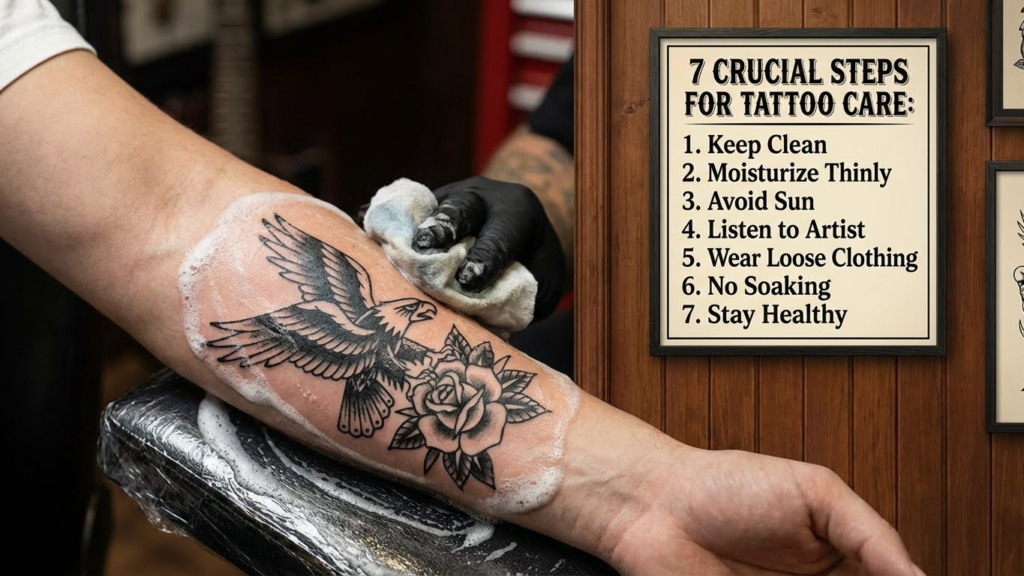
- Keep it Clean, Not Soaked: Gentle washing with an unscented soap 2–3 times a day is mandatory. Avoid long soaks in the bath or pool until fully healed.
- Moisture is Medicine: Aftercare should focus on light, breathable moisture. Too much petroleum-based ointment can suffocate the tattoo; too little leads to heavy, cracked scabs that pull ink out.
- Hands-Off Healing: Resist the urge to pick or scratch! If you notice rough healing, consider whether you are over-moisturizing or under-moisturizing.
✨ TOP PICK FROM FASHIONAURA.BLOG
Professional Tattoo Aftercare Balm
Why this fits: A high-quality balm provides the essential, non-greasy hydration needed to lock in black pigment during the critical healing phase.

Phase 2: The Sun is the Enemy of Contrast
Once your piece is healed, the lifelong commitment begins. For Black and White traditional work, UV damage is the ultimate villain. Sun exposure is what turns that deep, rich black into hazy, diluted blue-gray.
The bold lines of American Traditional are designed to withstand time, but they cannot withstand UV rays. Think of the sun as a gentle eraser for black ink.

Daily Strategies for Preserving Black Saturation
- Daily SPF, No Exceptions: Even on cloudy days, UV rays penetrate the skin. Apply broad-spectrum sunscreen religiously to all exposed tattoos.
- Layer Up: If you’re spending extended time outdoors, cover the piece entirely with clothing. Dark, tightly woven fabric provides the best protection.
- Stay Hydrated: Keeping the skin healthy and moisturized helps the black ink sit closer to the surface, maintaining its visual density.
Want to ensure your ink stays bright and vibrant, no matter the design? Protecting your pieces is just as important as choosing the right design. Learn more about selecting art that truly lasts in our post on Tattoos With Deep Meaning: 10+ Designs That Tell a Powerful Story.
✨ MUST-HAVE PROTECTION
Tattoo Specific Broad Spectrum Sunscreen Stick
Why this fits: Easy-to-apply sticks offer high SPF protection specifically formulated to not degrade tattoo ink, crucial for preserving black saturation.
Phase 3: The Art of the Touch-Up and Restoring Sharpness
Even with perfect care, all tattoos age. The sharp, crisp lines of American Traditional pieces may soften subtly over the years. This is where touch-ups come in. A well-executed touch-up isn’t a sign of failure; it’s part of the maintenance of high-quality art.

When to Seek a Touch-Up
Black & White pieces need touch-ups when the contrast diminishes significantly. Look for:
- Blown Out Lines: If the original crisp outline has spread (often called “blowout”) a touch-up can sometimes re-establish a sharper border (though prevention is key).
- Graying Fields: Large areas of black fill that have visibly faded or lightened, losing their solid opacity.
- Lost White Highlights: While many traditional pieces use negative space, some use white ink for highlights. White ink tends to fade or yellow first, and refreshing it brings life back to the piece.
Most reputable artists offer free or discounted touch-ups within the first year, but for pieces older than 5–10 years, expect to pay for the artist’s time and supplies. This investment restores the piece’s original integrity.
Understanding the aesthetic history helps you appreciate the long-term commitment. Dive into the roots of this enduring style and see why these pieces are worth preserving by looking through inspiration books.
✨ INSPIRATION & REFERENCE
Traditional Tattoo Flash Reference Book (Sailor Jerry Style)
Why this fits: Understanding the bold, clear foundational art style reminds collectors why maintaining that contrast is vital for the design’s success.
Final Tips: Skin Health & Ink Longevity
While the focus is on the ink, remember that your skin is the canvas. Healthy skin holds ink better, looks clearer, and maintains that crucial contrast longer.
If you love the intensity of large, meaningful designs, check out our guide on Small Tattoos With Big Meaning: Minimal Ink, Maximum Impact, which discusses design longevity even for smaller pieces.
For ultimate contrast, focus on these final habits:
- Avoid Over-Exfoliation: Harsh chemicals or aggressive scrubbing can prematurely pull pigment from the upper layer of the dermis. Treat tattooed skin gently.
- Manage Weight Fluctuations: Significant, rapid changes in weight can stretch or distort ink, especially in areas like the ribs, arms, and stomach.
Ready to Protect Your Traditional Art?
The beauty of Black & White American Traditional tattoos is their enduring clarity. They are meant to stand the test of time, but they require dedication. By mastering the aftercare phase, committing to lifelong sun protection, and knowing when to schedule that crucial touch-up, you ensure your piece remains a classic.
Did this guide help you form your ultimate tattoo care routine? Save this post now and follow Fashion Aura Blog for more insights on maintaining enduring style and aesthetics.
FAQs About Black & White Traditional Tattoo Maintenance
How often do Black & White traditional tattoos need touch-ups?
Generally, if cared for properly with religious sun protection, black and white traditional tattoos may need minor touch-ups only every 8 to 15 years. Large, heavily saturated black areas may hold up even longer, but white highlights usually need refreshing sooner.
Does black ink fade to blue or green?
Modern black tattoo ink is usually pure carbon-based pigment and should fade to a muted gray if exposed to the sun. If your black ink fades significantly blue or green, it may indicate a lower quality ink or excessive sun exposure breaking down the pigment components.
Can hydrating my skin actually help my tattoo contrast?
Yes. Well-hydrated skin is plumper, smoother, and healthier. When the skin is healthy, the ink layer looks clearer and denser, maximizing the contrast between the black pigment and the white negative space.