
Oh, the smell of fresh sourdough! There’s nothing quite like it, is there?
For years, I admired those beautiful, crusty loaves from afar, thinking sourdough baking was some secret art reserved for seasoned bakers. My first few attempts were, let’s just say, more “doorstop” than “delicious.” But I kept at it, and after countless experiments and a few minor kitchen disasters, I cracked the code.
Now, baking sourdough is a calming ritual for me, and I want to share my tried-and-true recipe that consistently delivers that perfect airy crumb and crackling crust we all dream of. This isn’t just a recipe; it’s a guide to help you conquer your sourdough fears and enjoy the incredible satisfaction of baking your own artisan bread right in your kitchen.
What You’ll Need Essential Sourdough Tools and Ingredients
Before we dive into the dough, let’s gather our essentials. Think of these as your sourdough toolkit. You don’t need anything fancy, just a few key items to set you up for success.
- Active Sourdough Starter: This is your magic ingredient! Make sure it’s bubbly and active, fed 4-12 hours before you start.
- Flour: I use a good quality unbleached bread flour for structure and a little whole wheat or rye for flavor, but all-purpose can work too.
- Water: Filtered, room temperature water is best.
- Salt: Fine sea salt or kosher salt.
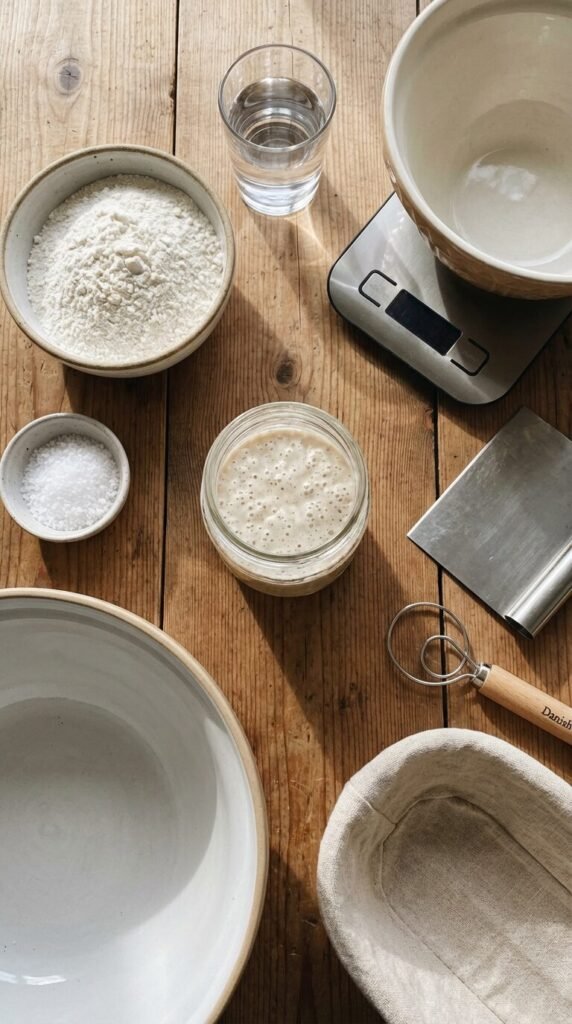
For tools, I highly recommend a kitchen scale for accuracy (baking is a science!), a large mixing bowl, a Danish dough whisk (optional but helpful), a bench scraper, and a Dutch oven. A banneton basket is great for proofing, but a floured bowl with a tea towel works perfectly fine too!
Feeding Your Starter The First Step to Sourdough Success
Your starter is the heart of your sourdough bread. It needs to be alive, happy, and active to give your bread that beautiful rise and tangy flavor. I always feed my starter 4-12 hours before I plan to mix my dough, aiming for it to be at its peak — bubbly, risen, and smelling faintly sweet and yeasty.
To feed it, simply discard most of your starter, leaving just a tablespoon or two. Then, add equal parts (by weight) of water and flour. For example, 50g starter, 50g water, 50g flour. Stir it well until combined, cover loosely, and let it sit at room temperature until it doubles in size and passes the float test (a small spoonful floats in water).
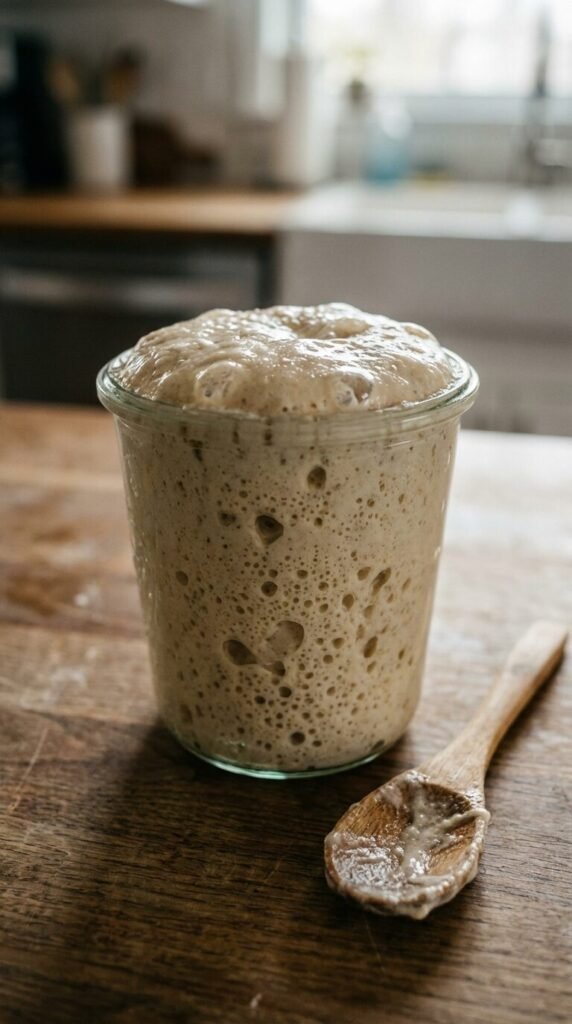
This active starter is what makes all the difference! Don’t rush this step; patience is key to a robust and flavorful loaf.
Mixing and Autolyse Building Flavor and Hydration
This is where the magic begins! The autolyse step is incredibly simple but crucial for flavor development and a better crumb. It involves just mixing flour and water and letting it rest before adding your starter and salt.
The Autolyse Step
In a large bowl, combine 400g filtered water with 500g bread flour. Mix until there are no dry spots – it will be shaggy and a bit stiff. Cover the bowl and let it rest for 30-60 minutes. This allows the flour to fully hydrate and gluten development to start naturally, making your dough easier to work with later.
Adding Starter and Salt
After the autolyse, add 100g active sourdough starter and 10g fine sea salt to your shaggy dough. Use your hands to gently mix and squeeze the ingredients together until everything is well incorporated. This might take a few minutes, but keep going until the salt is dissolved and the starter is evenly distributed. Your dough will start to feel a bit more cohesive.
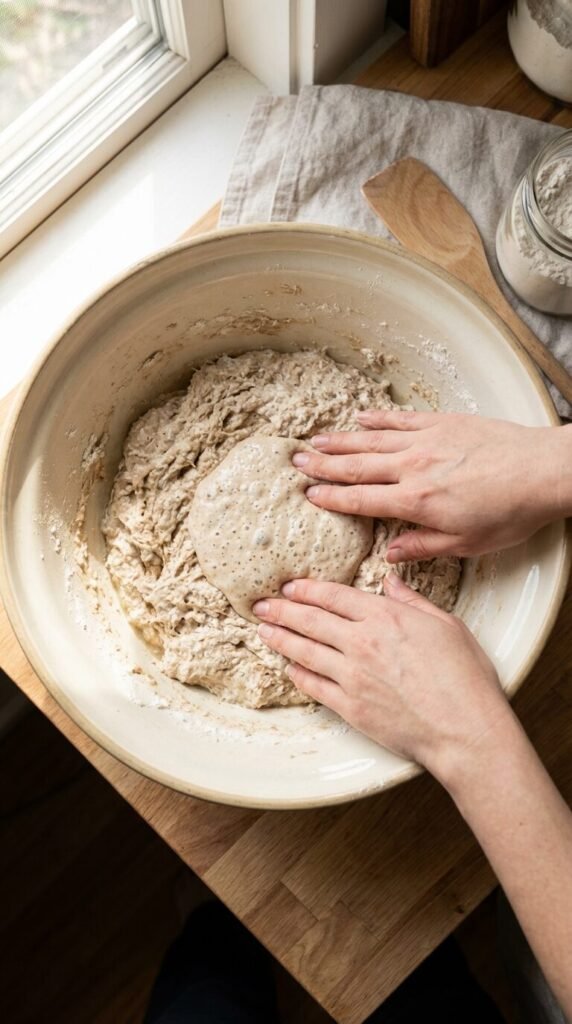
The Stretch and Fold Method Developing Gluten with Ease
Now that your ingredients are combined, it’s time to develop that beautiful gluten structure. We’ll use the stretch and fold method, which is much gentler than traditional kneading and perfect for sourdough.
Over the next 2-3 hours, perform 4 sets of stretch and folds, spaced 30-45 minutes apart. To do a stretch and fold:
- Wet your hands slightly to prevent sticking.
- Grab a section of the dough from one side, gently stretch it upwards, and then fold it over onto itself.
- Rotate the bowl a quarter turn and repeat this action 3-4 times until you’ve worked your way around the dough.
- Cover the bowl and let it rest until the next set.
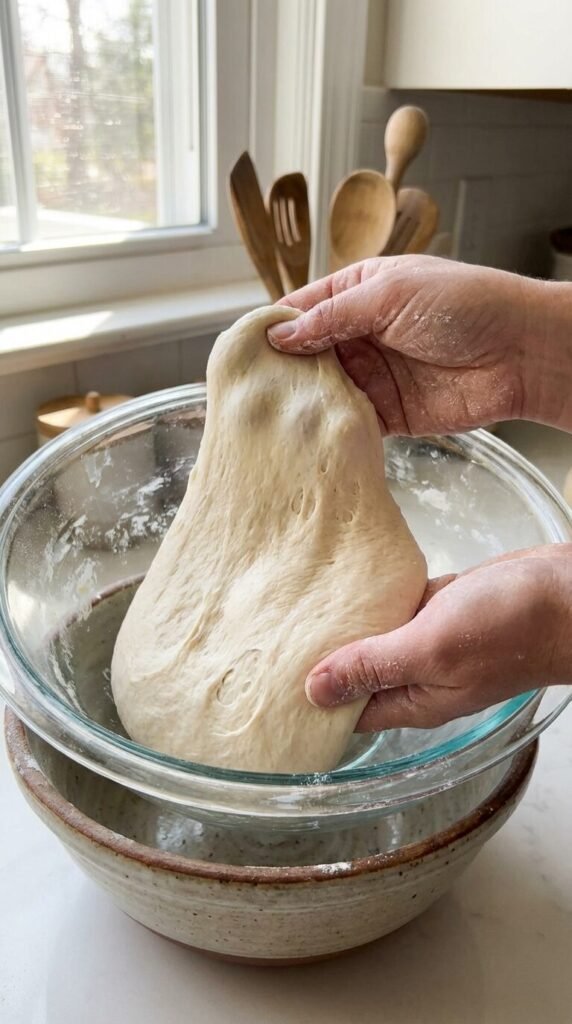
You’ll notice the dough becoming smoother, stronger, and more elastic with each set. It’s truly fascinating to watch it transform!
Bulk Fermentation and Shaping The Magic Happens Here
After your stretch and folds are complete, your dough enters its bulk fermentation (or first rise) phase. This is where your starter really gets to work, creating gas and building flavor. The duration depends on your kitchen temperature – it could be anywhere from 4-8 hours. Look for the dough to increase in volume by about 30-50% and appear bubbly and jiggly.
Preshape and Rest
Once bulk fermentation is done, gently turn your dough out onto a lightly floured surface. Preshape it into a round or oval, being careful not to degas it too much. Let it rest for 20-30 minutes, uncovered. This allows the gluten to relax, making final shaping easier.
Final Shaping
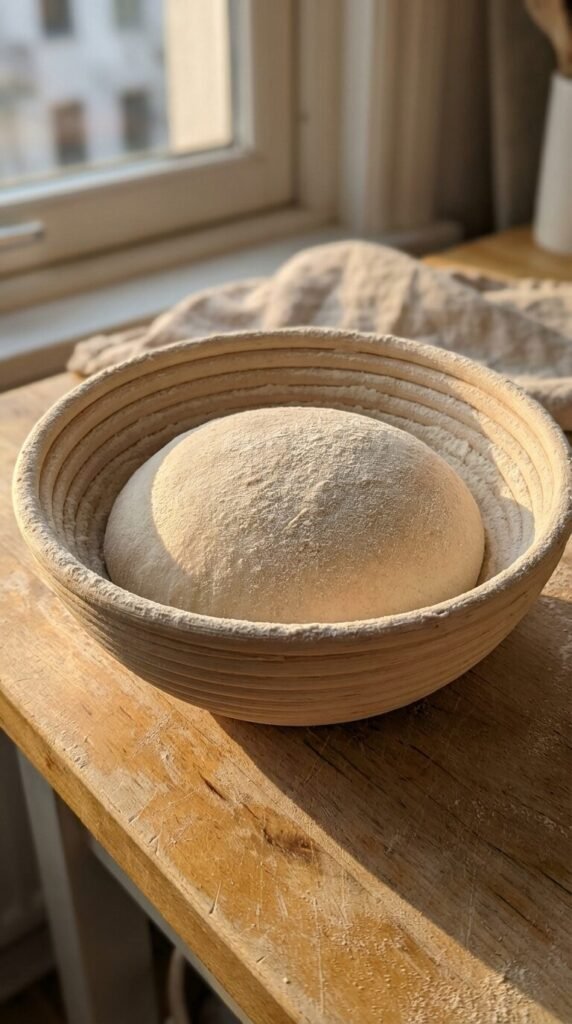
After the rest, perform your final shaping. This is crucial for building tension in the dough, which helps with oven spring. There are many techniques, but a simple method is to gently pull the top edge towards you, then fold the sides into the center, and finally roll the dough away from you, creating a taut surface. Place it seam-side up into a floured banneton or a bowl lined with a floured tea towel.
Cold Proofing and Baking Achieving That Golden Crust
Now for the waiting game, which is totally worth it! Cold proofing in the refrigerator slows down fermentation, developing deeper flavors and making the dough much easier to handle and score. I usually cold proof mine for at least 12 hours, sometimes up to 24.
Baking Day
- Preheat your oven to 450°F (230°C) with your Dutch oven inside for at least 30 minutes.
- Carefully remove the hot Dutch oven. Gently flip your cold dough into it.
- Score the top of your dough with a sharp razor or lame – this helps guide the oven spring.
- Bake with the lid on for 20 minutes (this traps steam for a beautiful crust).
- Remove the lid and bake for another 25-30 minutes, or until the crust is a deep golden brown.
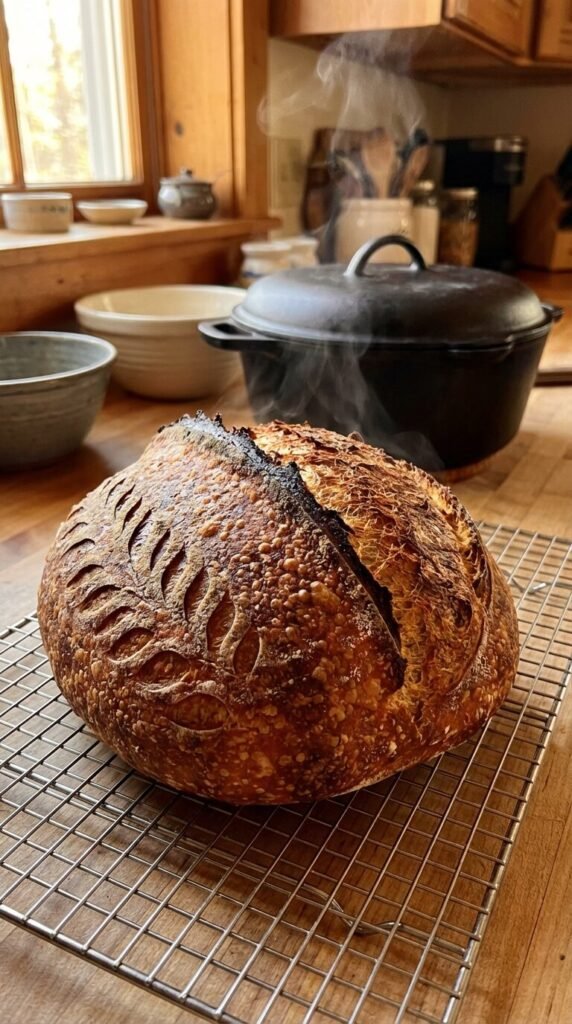
Cool your bread completely on a wire rack before slicing. I know, it’s hard to wait, but it’s essential for the crumb to set properly. This warm, fresh bread is absolutely divine served with butter or alongside a hearty morning meal. If you’re looking for inspiration, these 18 Cozy Warm Breakfast Bowl Recipes pair wonderfully with a slice of homemade sourdough!