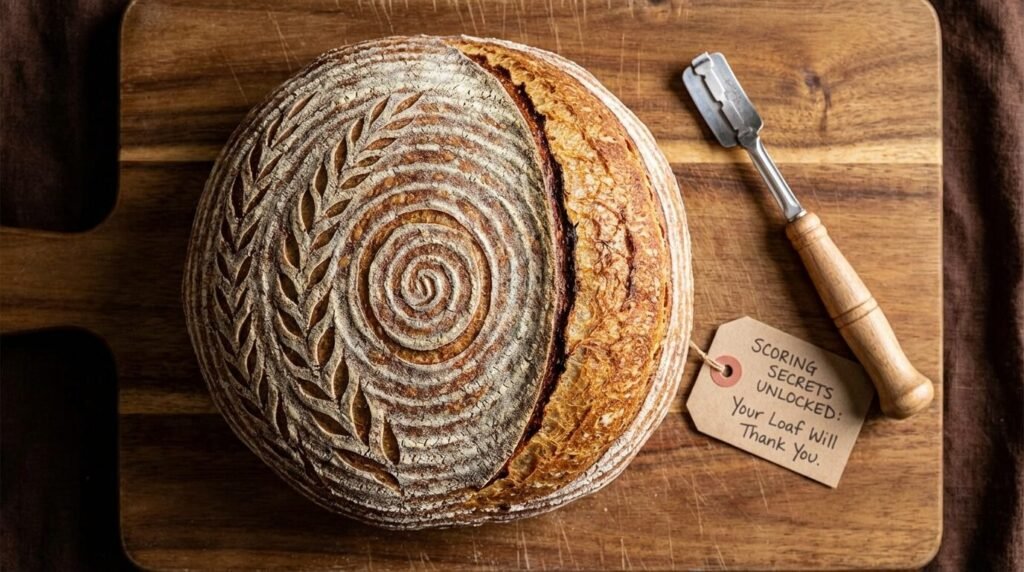
Ever pull a glorious sourdough loaf from the oven, only to find it looks… well, a little plain? Like it’s missing that certain je ne sais quoi?
I totally get it. For ages, my sourdough tasted amazing, but the exterior never quite matched the beauty I saw all over Pinterest. My loaves were good, but they weren’t stunning. They lacked that dramatic “ear” and those intricate patterns that scream artisan.
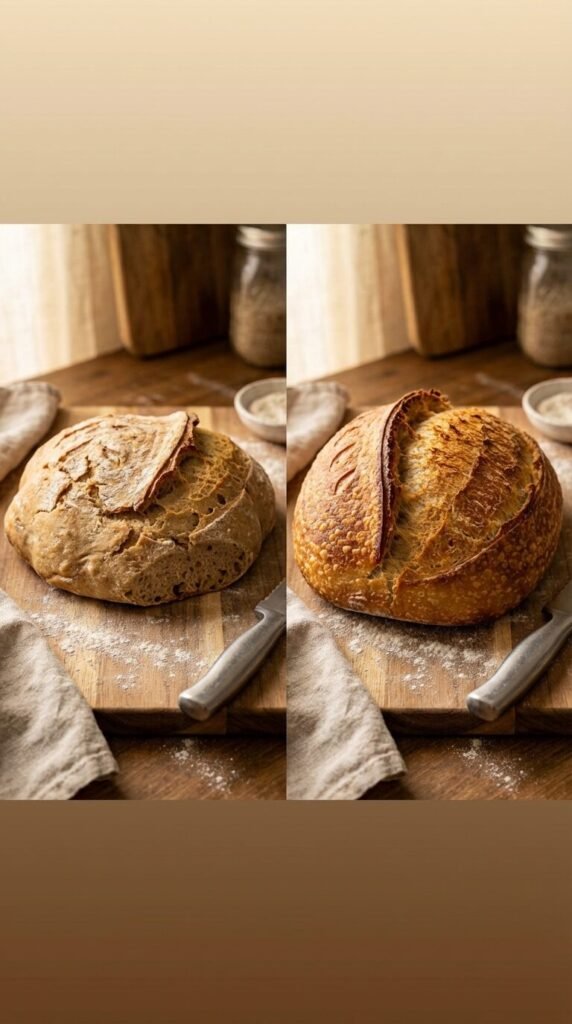
That’s where sourdough scoring comes in. It’s not just about making your bread look pretty (though it totally does that!). It’s a crucial step that impacts everything from oven spring to crust texture, transforming a simple round of dough into a masterpiece.
If you’ve been intimidated by scoring or just want to elevate your bread game, you’re in the right place. I’m going to walk you through everything you need to know to confidently score your sourdough, creating loaves that are as beautiful as they are delicious.
Why Sourdough Scoring Matters More Than You Think
Scoring, at its heart, is about control. When your dough hits the hot oven, it goes through a rapid expansion called “oven spring.” Without a score, the crust can tear unpredictably, or worse, restrict the dough from expanding fully, resulting in a dense, less airy loaf.
By making strategic cuts, you’re guiding that expansion. You’re telling the dough exactly where to burst open, creating that coveted “ear” – a flap of crust that rises dramatically and gets extra crispy. It’s pure magic to watch it happen.
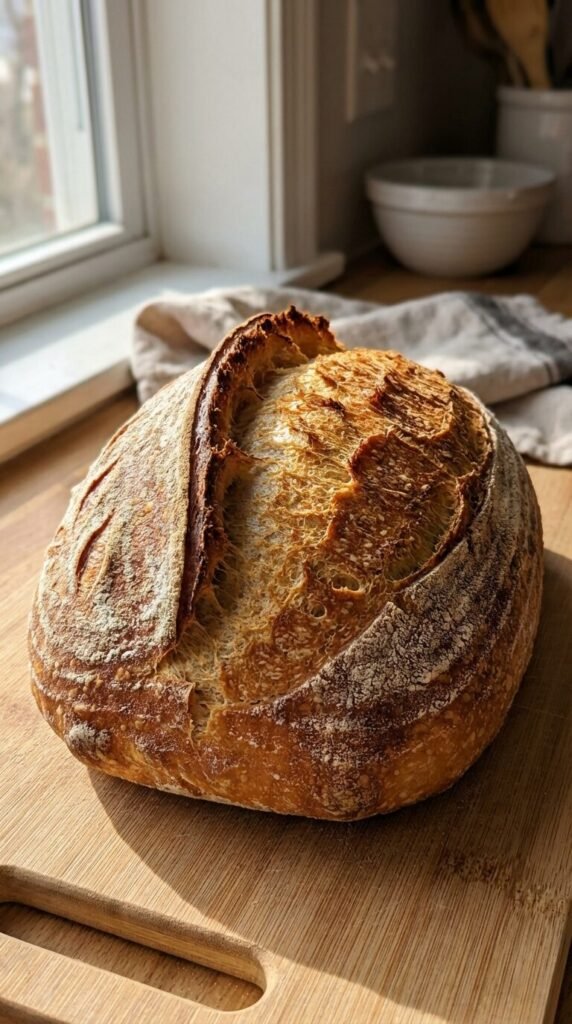
Beyond the ear, scoring also allows steam to escape from the loaf’s interior, contributing to a lighter crumb and a crisper, more beautifully colored crust. And yes, it absolutely makes your bread look like it came from a fancy bakery. It’s the ultimate edible art form.
Essential Tools for Perfect Sourdough Scoring
Good news! You don’t need a huge arsenal of specialized gadgets to get started. The most important tool is a good scoring blade, often called a lame (pronounced “lahm”).
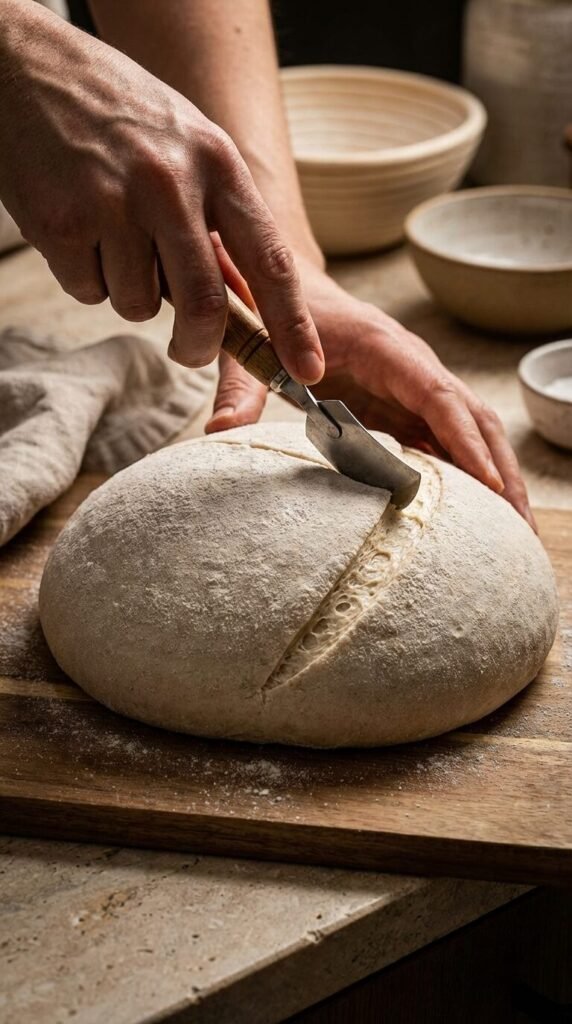
- A Lame: This is a small, curved handle designed to hold a razor blade. The curve helps you achieve those elegant, deep cuts. I prefer a curved lame for creating the ear.
- Double-Edged Razor Blades: These are super sharp and readily available. Change them often; a dull blade will drag and tear your dough.
- A Very Sharp Knife: If you don’t have a lame, a very sharp paring knife or even a serrated knife can work in a pinch, though it’s harder to get the same clean, deep cuts.
- Bowl of Water: Keeping your blade wet helps prevent sticking, especially with stickier doughs. I always have one by my side when I’m about to score.
Remember, safety first! Razor blades are incredibly sharp. Always handle them with care and store them safely away from little hands.
Basic Sourdough Scoring Patterns for Beginners
Don’t jump straight to the elaborate designs. Start simple to build confidence and understand how your dough reacts. The goal here is function first, then beauty.
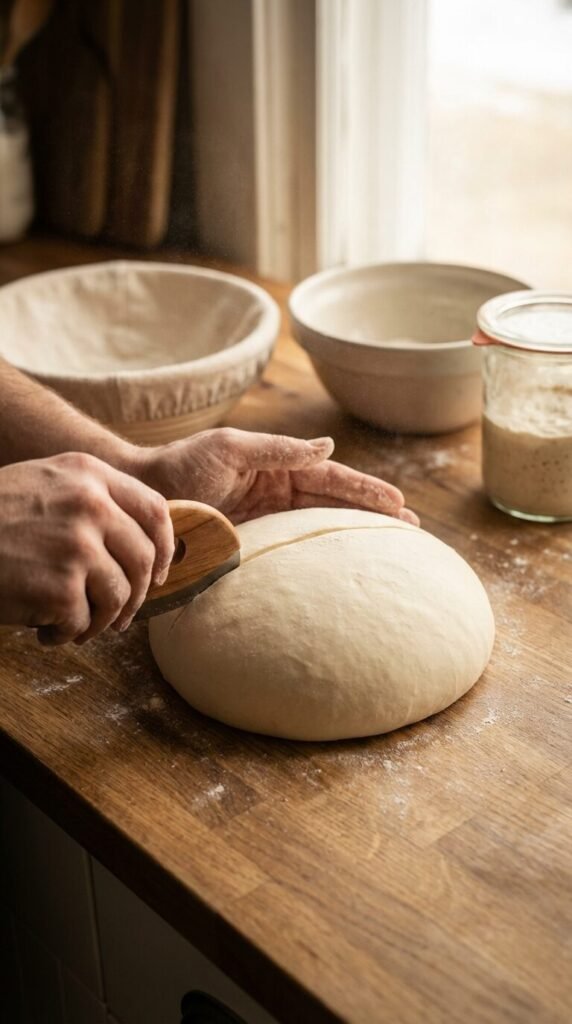
The Single Slash: This is my go-to for a reliable ear. Position your lame at about a 30-45 degree angle to the surface of the dough. Make one confident, deep cut (about 1/2 to 3/4 inch deep) across the top of the loaf, slightly off-center.
The Cross: For a more symmetrical look, make two perpendicular cuts in the shape of a cross or a plus sign. These cuts can be shallower, around 1/4 inch deep. This is fantastic for a rustic, open bloom.
Practice these a few times. You’ll quickly get a feel for the dough and the pressure needed.
Advanced Sourdough Scoring Designs to Impress
Once you’re comfortable with the basics, a whole world of artistic expression opens up! These patterns often involve a combination of deep and shallow cuts.
The Wheat Stalk: This is a classic for a reason. Start with a deep, curved cut down the center. Then, on either side, make a series of short, shallow, diagonal cuts pointing inwards, creating the look of wheat grains. It’s stunning!
Leaf Patterns: Similar to the wheat stalk, but instead of straight lines, you create curved, delicate cuts mimicking veins on a leaf. A central deep cut forms the stem, and then shallow, curved cuts branch out.
Geometric Designs: Think spirals, concentric circles, or intricate lattice work. These usually involve many shallow cuts, with one or two deeper “expansion scores” hidden within the design to ensure good oven spring.
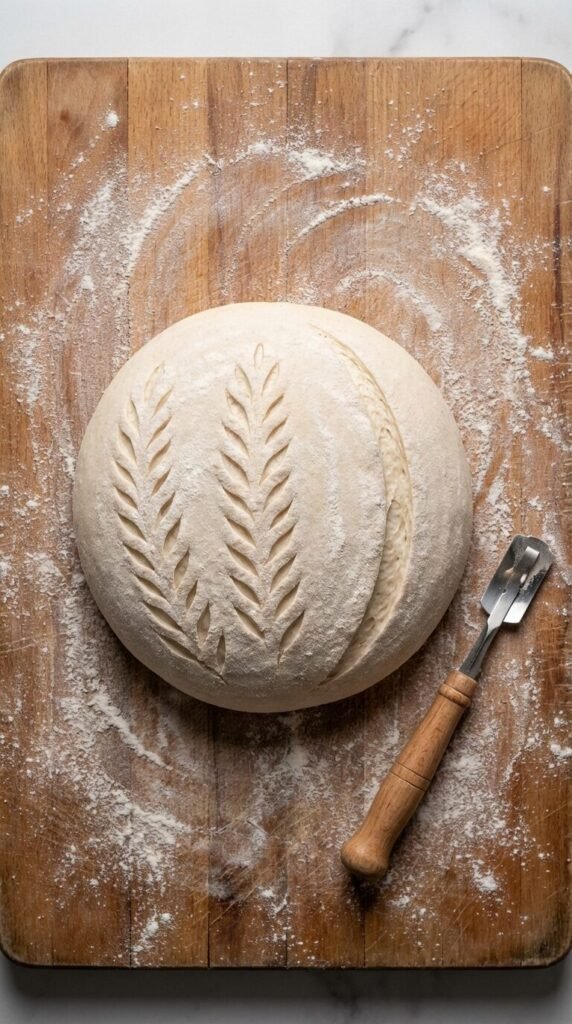
These elaborate scores make your sourdough a true centerpiece, perfect for serving with an array of cheeses and spreads. If you’re looking for other impressive food ideas for entertaining, you might enjoy these 10 Show Stopping Charcuterie Board Ideas Your Party Guests Will Rave About. A freshly baked, beautifully scored sourdough loaf would be a star on any of those boards!
Tips for Mastering Your Sourdough Score
Scoring isn’t just about the pattern; it’s about technique. Here are my best tips for consistently beautiful results:
- Chill Your Dough: Cold dough is firm dough. I always proof my final dough in the fridge overnight. This makes it much easier to handle and score without sticking or collapsing.
- Be Quick and Confident: Hesitation leads to jagged, messy cuts. Aim for swift, decisive motions. Imagine you’re drawing with the blade.
- Angle is Key: For a dramatic ear, hold your lame at a shallow angle (30-45 degrees) to the dough. For decorative, shallower cuts, hold it more vertically (90 degrees).
- Depth Matters: The main expansion score (like the single slash) needs to be deep enough, typically 1/2 to 3/4 inch. Decorative scores are usually only 1/8 to 1/4 inch deep.
- Keep the Blade Wet: Dip your lame in water between cuts, especially if your dough is sticky. It helps the blade glide smoothly.
- Practice, Practice, Practice: Your first few scores might not be perfect, and that’s okay! It’s a skill that develops over time. Try practicing on scrap dough or even a soft fruit like an orange.
Once you nail your scoring, you’ll be making loaves so gorgeous, you’ll want to pair them with equally impressive meals. Speaking of meals, for those times you need a quick and satisfying start, check out these 10 Easy Breakfast Bowls for Beginners (No Cooking Skills Required!) – perfect for enjoying alongside a slice of your artisan bread.
Troubleshooting Common Scoring Mistakes
Even seasoned bakers run into issues sometimes. Here are a few common problems and how to tackle them:
- Blade Sticking and Dragging: Your blade might be dull, or your dough might be too warm and sticky. Try chilling your dough more, wetting your blade between cuts, or changing to a fresh razor.
- Cuts Aren’t Opening: This often means the score wasn’t deep enough, or the dough might be underproofed and doesn’t have enough gas to expand. Make sure your main cuts are deep and confident.
- Too Many Tears or Cracks: This can happen if the score is too shallow, or if the dough is overproofed and has lost its structure. It can also be due to not having enough steam in your oven during the initial bake.
Don’t be discouraged by a less-than-perfect score. Every loaf is a learning opportunity. Just keep experimenting with angles, depths, and dough temperatures. The reward of a perfect loaf is always worth it!
After all that effort baking, you might want some delicious and easy meal ideas to serve your beautiful bread with. For more inspiration, especially for busy mornings, take a peek at these 50 Cheap & Easy Breakfast Bowl Recipes You Can Meal Prep on Sunday. Imagine a warm bowl alongside a slice of your homemade sourdough – pure bliss!
Mastering sourdough scoring truly elevates your home baking. It takes a humble loaf of bread and turns it into a work of art, boosting your confidence and impressing everyone who sees (and tastes!) it. It’s a skill that makes your baking journey even more rewarding.
So, grab your lame, chill your dough, and get ready to create some absolutely stunning loaves. You’ve got this!
Did this guide inspire you to pick up your lame? Save this post to your Pinterest board for future reference, share it with a fellow sourdough enthusiast, and tag me when you show off your gorgeous creations!