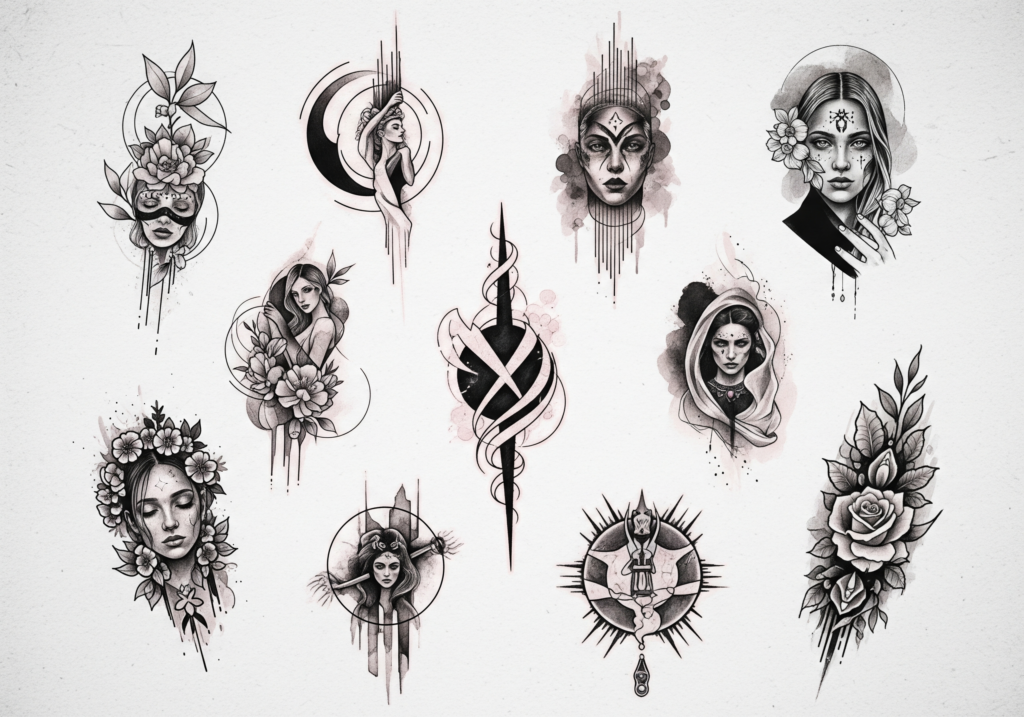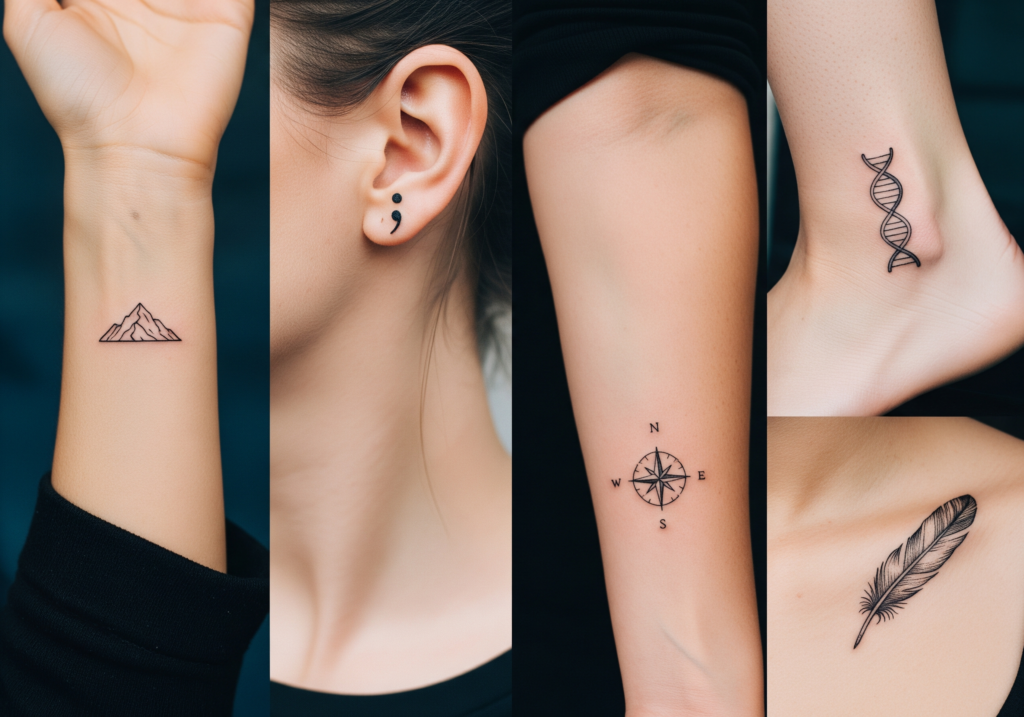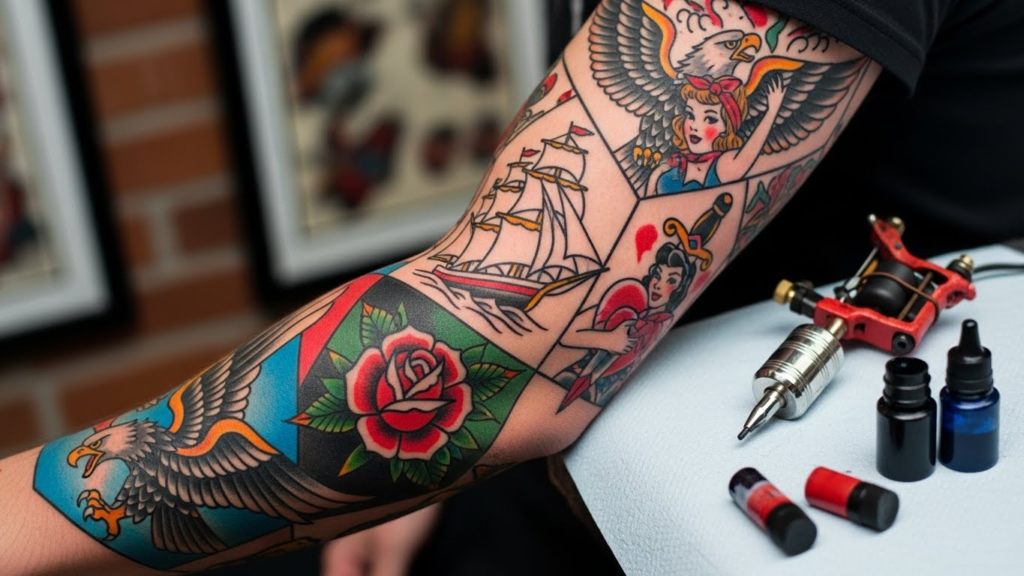
There are few tattoos as satisfying, bold, and timeless as a full American Traditional sleeve. Unlike modern realism or fine-line work that demands large, connected pieces, the traditional style thrives on contrast and space, creating what we call a “patchwork” look.
When I finally committed to building my own traditional sleeve, I was overwhelmed. Where do you start? What size should the pieces be? How do you ensure it looks cohesive, not just like a collection of random tattoos?
After years spent researching classic flash and working with incredible artists, I’ve broken down the exact strategy needed to move from a bare arm to a masterpiece. If you’re ready to embrace the heritage and aesthetic of true American Traditional, this guide is your blueprint.
Step 1: Mastering the Flash & Defining the Flow
The foundation of a perfect patchwork sleeve is ‘flash.’ Flash refers to pre-drawn tattoo designs—think Sailor Jerry, Bert Grimm, or Don Ed Hardy. These designs are meant to stand alone and define the look. You aren’t looking for a single narrative; you’re looking for bold contrast.
Your first step is selecting 3-4 major focal points (e.g., a large eagle, a clipper ship, a pin-up girl). These should be placed on high-visibility areas like the outer bicep, inner forearm, and elbow ditch.
- Choose Classics: Stick to classic motifs—roses, hearts, daggers, panthers, snakes. They are designed to age perfectly.
- Vary Scale: Don’t make all the major pieces the same size. Variety creates movement and allows for better gap filling later.
- Respect the Space: Leave adequate skin space between the initial major pieces. This is crucial for the patchwork effect.
✨ TOP PICK FROM FASHIONAURA.BLOG
Traditional Tattoo Flash Reference Book (Sailor Jerry Style)
Why this fits: Studying authentic flash is the best way to understand the scale, lines, and aesthetic needed for a cohesive traditional sleeve.
When choosing motifs, think about the stories you want to tell. Even small, seemingly simple designs carry historical weight and meaning. If you are interested in conveying complex ideas through ink, you might find inspiration in my guide on Tattoos With Deep Meaning: 10+ Designs That Tell a Powerful Story.
Step 2: The Art of Gap Management and Fillers
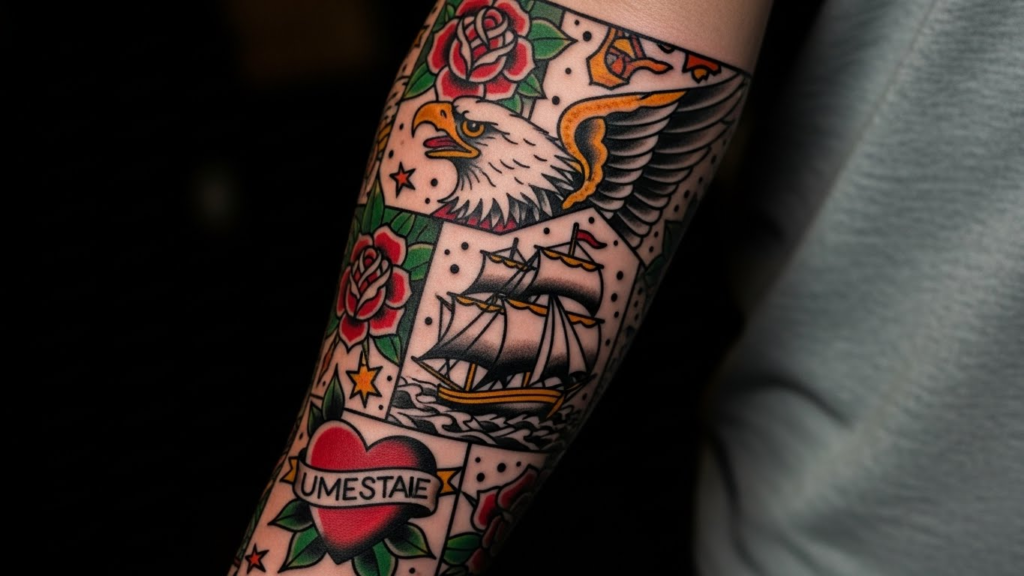
The biggest challenge in a patchwork sleeve is resisting the urge to pack everything too tightly. The “patchwork” effect relies on the negative space—the skin—acting as the canvas separation.
Once your major pieces are healed and settled (give them a few months!), you can start filling the gaps. This is where small, iconic filler pieces shine.
Choosing the Right Fillers
Avoid trying to squeeze another major piece into a minor gap. Instead, use elements specifically designed to frame the larger tattoos without competing with them:
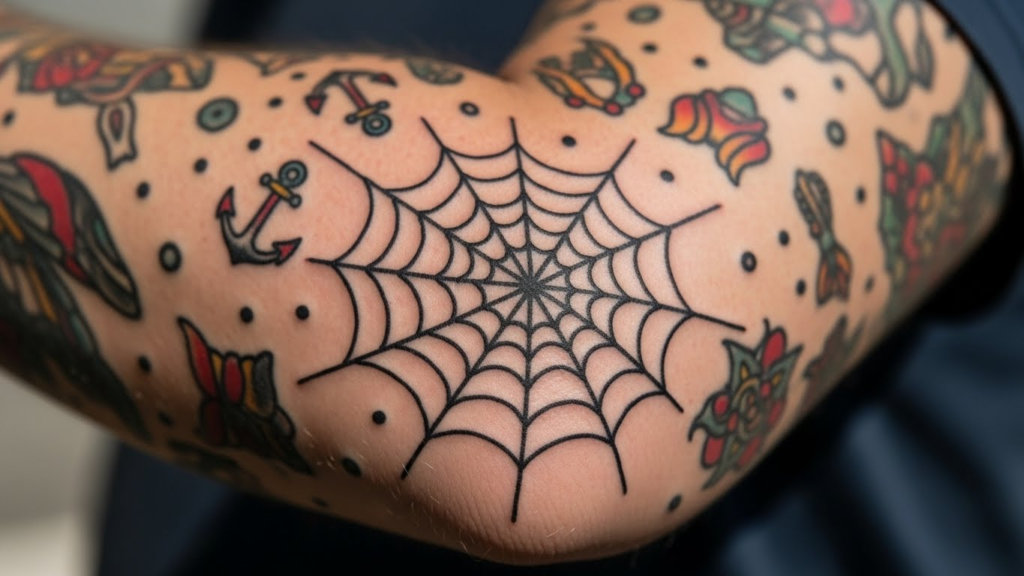
- Stars and Dots: Simple, fast, and classic. Small dots (or “stardust”) are often used right up against the borders of the main pieces.
- Spiderwebs: Excellent for filling the elbow area or other joints where skin moves a lot.
- Tiny Motifs: Small anchors, chains, dice, or nautical stars are perfect. These are often considered Small Tattoos With Big Meaning, adding depth without taking over.
Work methodically from the top of the sleeve down, or from the largest pieces outward. Keep communicating with your artist about the final density you want. A truly dense sleeve should look intentional, not accidental.
Step 3: Color Theory and Commitment to Boldness
American Traditional is defined by its limited, punchy color palette: black, red, yellow, and green (sometimes deep blue or brown). Resist the temptation to introduce subtle shading or complex color gradients. Boldness is key.
When planning your sleeve, ensure a balanced distribution of colors. If the bicep piece is heavily red, balance it with a piece on the forearm that features more yellow or green.
Long-Term Care for Vibrancy
Because these tattoos are meant to last a lifetime, healing and long-term protection are non-negotiable. Traditional designs look their best when the colors stay true and the deep black lines remain sharp.
✨ TOP PICK FROM FASHIONAURA.BLOG
Professional Tattoo Aftercare Balm
Why this fits: Proper healing is essential for crisp lines and vibrant color saturation, especially with bold traditional pigments.
After the initial healing phase, sun protection is your absolute best friend. Nothing degrades the vibrancy of ink faster than UV rays, particularly the yellow and red pigments.
✨ TOP PICK FROM FASHIONAURA.BLOG
Tattoo Specific Broad Spectrum Sunscreen Stick
Why this fits: Daily sun protection is critical to prevent fading and keep your bold black outlines sharp for decades.
Treating your tattoos well is just as important as choosing a flattering outfit—it’s all part of a cohesive personal aesthetic. Just like styling utilitarian fashion requires attention to detail, maintaining bold ink requires consistent care (and perhaps even a good Khaki Coded Casual Layer to protect it outdoors).
Step 4: The Final Touches & Consistent Outlining
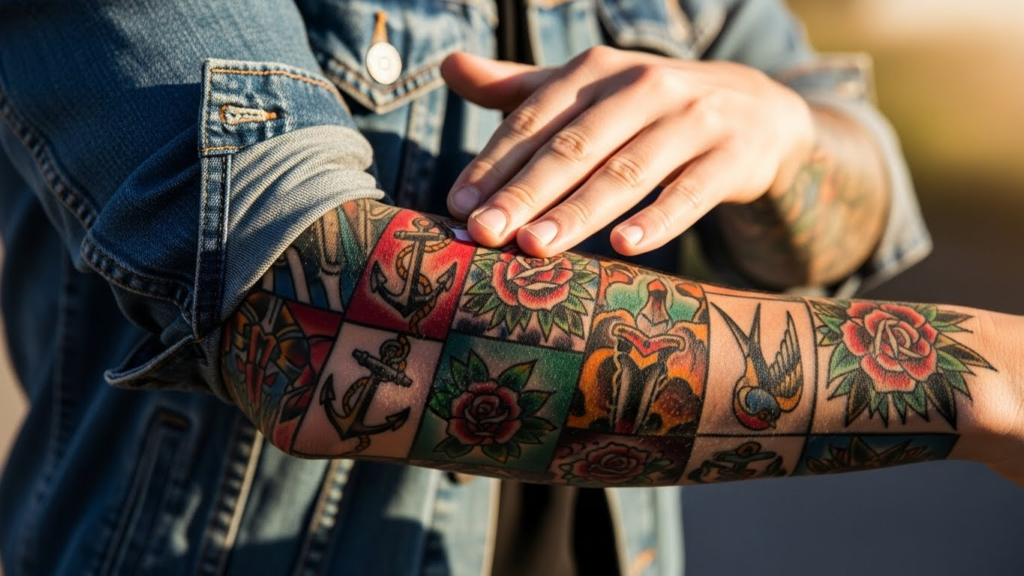
What truly unites a patchwork collection is the application technique. American Traditional relies on exceptionally thick, black outlines. All pieces, regardless of size, should share this foundational characteristic.
If you switch artists during the process—which is common for a sleeve that takes years—make sure the new artist understands the necessity of matching the original line weight and color application style.
Consistency in technique transforms a collection of individual tattoos into one unified, monumental piece of art. This commitment to bold lines ensures that your sleeve remains impactful and readable even from a distance, standing the test of time.
Conclusion: Your Forever Flash
Designing an American Traditional patchwork sleeve is a journey, not a destination. It’s a commitment to permanence, history, and a striking aesthetic that never fades from style.
Focus on bold choices, embrace the natural gaps, and commit fiercely to aftercare. By respecting the tradition of flash and planning your flow, you create a sleeve that is not just a bunch of tattoos, but a wearable, timeless tapestry of ink.
Loved these planning steps? Don’t let this guide disappear! Tap the save button and pin this article to your Tattoo Inspo board for future design reference!
FAQ: About Patchwork Sleeves
How long does it take to complete a patchwork sleeve?
Because the patchwork style relies on many individual pieces, it can take 12 to 24 separate sessions over 1 to 3 years. It’s crucial to wait for each piece to heal completely before moving on to an adjacent area, especially when filling in those tight gaps.
Do I need to use the same artist for the entire sleeve?
No, many people use multiple artists for a traditional sleeve, which is part of the fun! However, ensure all chosen artists specialize in American Traditional and communicate with them about maintaining consistent line weight and color palettes to achieve a cohesive look.
What is the best way to fill the elbow gap?
The elbow ditch is tricky due to movement and stretch. Classic fillers like spiderwebs, mandalas (traditional style only), or simple geometric shapes work best. Some people opt for a single, large piece that wraps around the elbow, like a large peony or a snake, which requires careful planning with the artist.