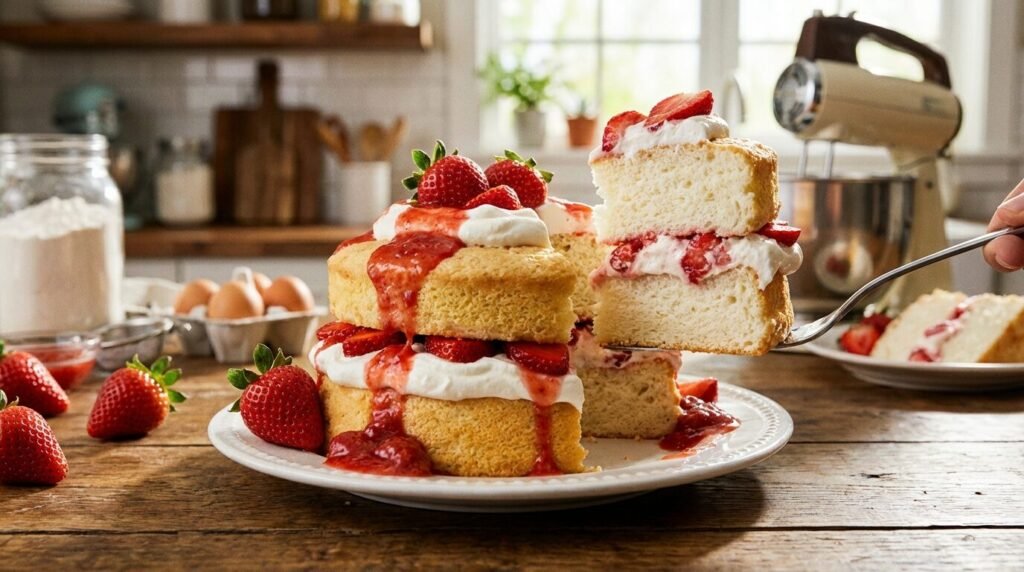
I spent years on the hunt for the perfect strawberry shortcake base. Years, I tell you.
It was my grandmother’s birthday tradition, and every summer, I would bake what I thought was the perfect dessert, only to realize the cake was too crumbly, too dry, or completely overpowered by the luscious berries and cream.
The traditional American biscuit shortcake is lovely, but let’s be honest, it often requires a gallon of cream just to make it edible. I was chasing something better: a light, springy, buttery sponge that could soak up the berry juices without collapsing.
After countless tests and a few shortcake disasters, I finally cracked the code. This is the recipe that changed my summer dessert game forever, and trust me, it’s going to be yours too. This isn’t just cake; it’s the supportive foundation your beautiful, fresh strawberries deserve.
Why a Yellow Sponge Cake Trumps Biscuit Base
If you’ve always used a dense, slightly salty biscuit or scone for your shortcake, prepare for a revelation. While the biscuit base is traditional, it poses two main problems: density and dryness. Strawberry shortcake should feel light and airy, even though it’s rich.
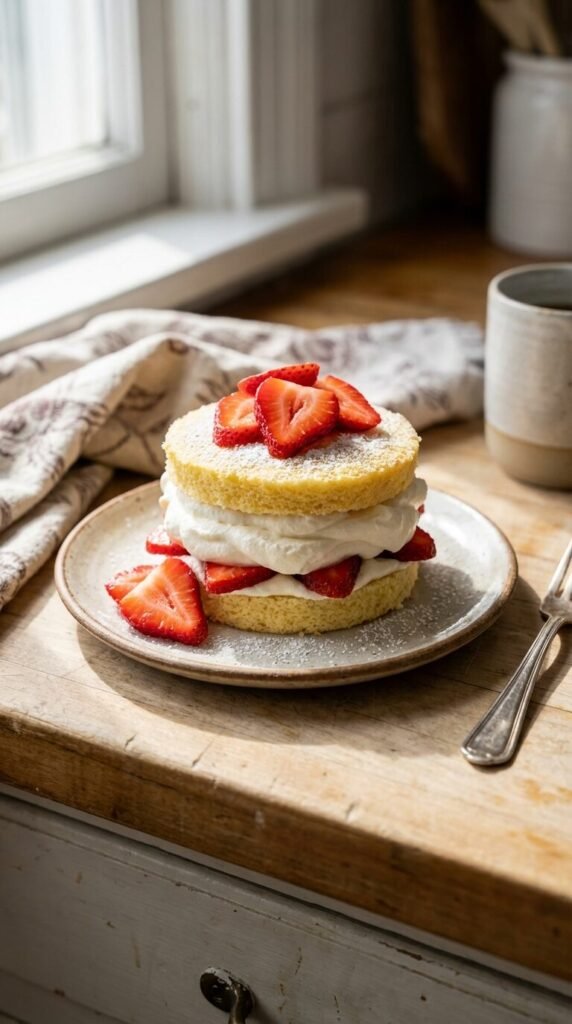
A properly made yellow sponge cake offers superior moisture retention and structure. It’s soft enough to melt in your mouth alongside the cream, but sturdy enough not to turn into mush when saturated with macerated strawberry juice. It’s the ideal canvas for the vibrant red and white layers.
The slight sweetness and butteriness of this cake recipe also balances the tartness of the berries perfectly. It makes the whole experience feel less like a heavy meal and more like a delightful, cloud-like dessert.
If you are looking for recipes that offer great flavor without the carb load of traditional baking, you might enjoy these 7 High Protein Low Carb Low Fat Meals That Are Actually Delicious to balance out this sweet indulgence.
Secret Ingredient for Unbeatable Moisture
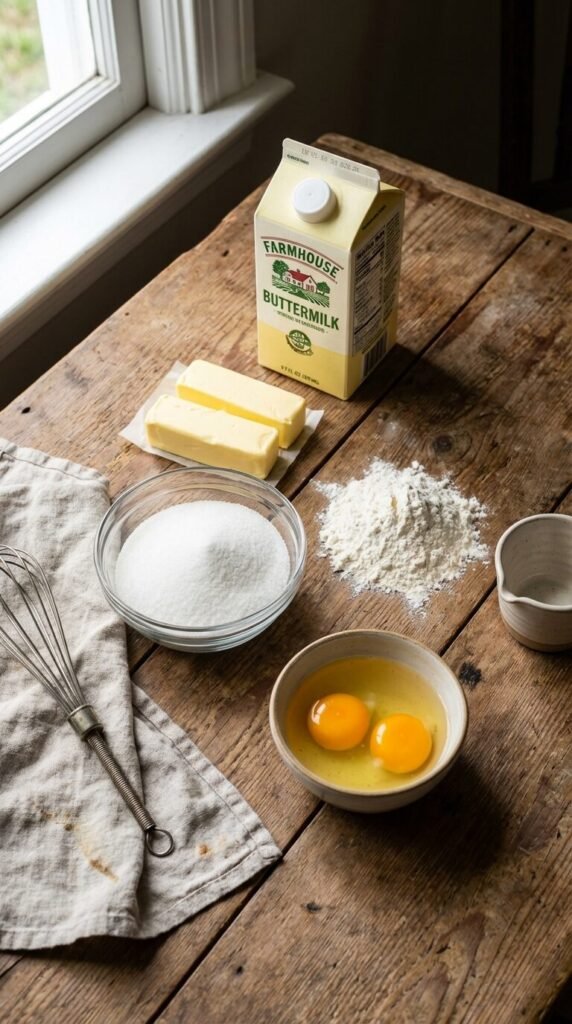
The real secret to this recipe isn’t just the ratio of flour to sugar; it’s the inclusion of one unassuming dairy product: full-fat buttermilk.
Buttermilk is an acidic component that tenderizes the gluten in the flour, resulting in an exceptionally tender crumb. It works beautifully with baking soda to give a gentle lift without making the cake dry or tough.
If you don’t keep buttermilk on hand, sour cream works almost as well, adding a decadent richness. However, I always recommend sticking to buttermilk if you can. It guarantees that elusive, moist texture.
Another crucial technique is ensuring your butter is softened, not melted, and that you whip your eggs until they are pale and fluffy before adding the dry ingredients. This incorporates enough air to make the cake light, even before the chemical leaveners kick in.
I’ve spent so much time perfecting methods, whether it’s baking or something more complex like perfecting a sourdough starter. Mastering the fundamentals is everything, just like my trusted My Go To Sourdough Recipe for a Perfect Crust and Crumb ensures a great loaf every time. Baking is a science!
Batter Technique That Guarantees Fluff
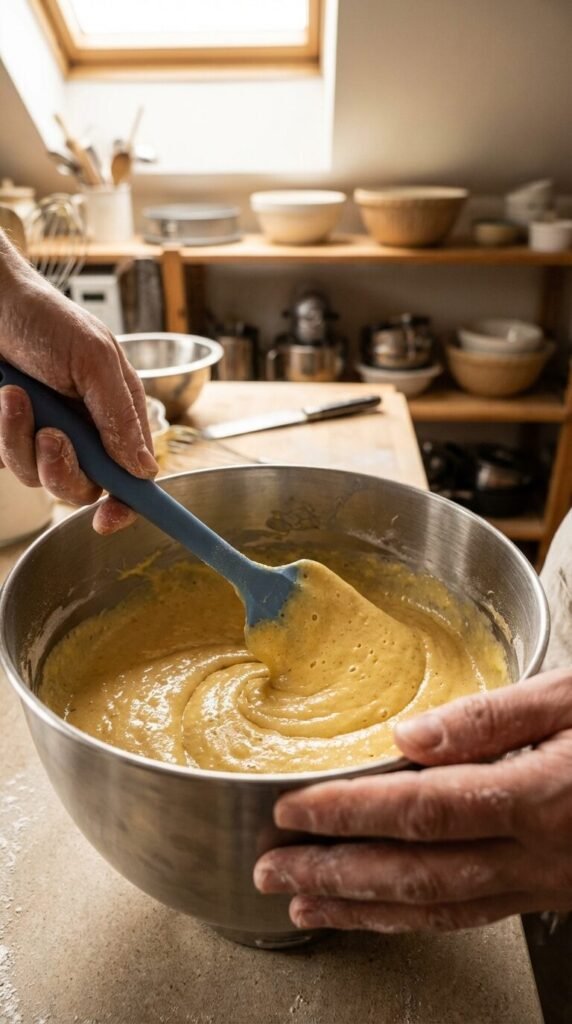
Getting the right consistency is what separates a decent cake from a truly stunning one. The key here is not to overmix, ever.
Once you combine the wet and dry ingredients, mix only until the streaks of flour just disappear. Overmixing develops too much gluten, which cancels out the tenderizing effect of the buttermilk and results in a tough cake.
I use a spatula for the final incorporation, gently folding everything together.
Another secret? Bake it low and slow. Instead of a blazing-hot oven, use a moderate temperature (325°F or 160°C). This allows the cake to bake evenly all the way through without drying out the edges before the center is cooked.
When done, the cake should be a beautiful golden-brown and spring back lightly when touched. Let it cool completely before slicing and layering. This prevents the cream from melting and the cake from tearing.
This beautiful sponge cake proves that baking doesn’t have to be heavy. If you’re into slightly healthier spins on your favorite treats, you should absolutely check out 5 Healthy Matcha Cake Recipes You’ll Actually Crave (Seriously Delicious!) for your next baking project.
Finished Shortcake Assembly
The best part? Serving it.
Slice the cooled cake horizontally into two or three layers, depending on how tall you want your shortcake. Lightly brush the layers with a touch of the strawberry juice before assembling—just enough for flavor, not so much that it gets soggy.
For the cream, always use freshly whipped cream sweetened with a touch of vanilla and powdered sugar. The canned stuff just won’t do justice to the fluffy cake you just spent time creating.
Layer cake, cream, berries, and repeat. The result is a dessert that looks like it came straight from a gourmet bakery but has all the warmth and love of a homemade classic.
Give this sponge cake base a try this season. I promise, once you experience that perfect balance of light cake, rich cream, and fresh berries, you’ll never go back to the biscuit.